Showing posts with label Iron Man. Show all posts

Wednesday, 18 November 2009

70 Years of Marvel - 2007


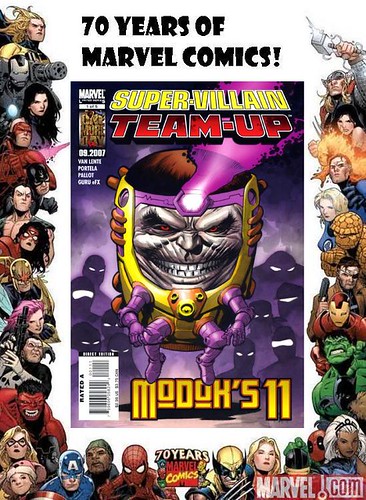
One of the highlights of 2007 was this little gem, MODOK's 11, in which the Big Giant Head recruits a couple of fistfuls of followers, including second-stringers like Mentallo, the Armadillo, and the Chameleon, to commit the ultimate robbery. With the rest of the Marvel Universe getting increasingly grim and gritty, this was a nice lighthearted little romp, and got Fred Van Lente his first start in the Marvel Universe proper.

Other than this, most books in 2007 revolved around either the fallout from Civil War, the consequences of the Annihilation Event, or the Hulk's invasion of New York. The Spider-Books were being culled left, right, and centre, whilst Spidey himself was making a deal with the devil to save his Aunt May. Elsewhere, JMS was being recruited to revamp Thor, Captain America was getting shot, and Iron Man was being appointed Director of SHIELD. The world was getting weirder, that was for sure.

Monday, 16 November 2009

70 Years of Marvel - 2006


By 2006, "event comics were rampant at Marvel. We had, in no particular order:

X-Men: Deadly Genesis - in which Ed Brubaker finally answered the question of who Cyclops and Havok's mystery brother was, about a decade after anyone had last expressed an interest in finding this out. The third brother, Vulcan, believed dead, and erased from the memories of everyone who met him (by that good guy, Professor X), came back from the dead, kidnapped the X-Men, killed Banshee, then went off into space to conquer the Shi'ar Empire.

Civil War - in which Mark Millar spins a yarn in which the New Warriors accidentally blow up a school, and the superhero community is torn in half, with factions arguing for and against superhero registration led by Iron Man and Captain America respectively, Spider-Man reveals his secret identity to the world, and Hank Pym builds a clone of Thor.

Planet Hulk - in which Mr Fantastic, Iron Man, Black Bolt and Dr Strange decide to exile the Hulk into space, accidentally sending him to a planet of enslaving insects, whom he proceeds to conquer. Planet Hulk's writer, Greg Pak, would subsequently return the Hulk to Earth to kick some arse, but this was a far superior tale.

Annihilation - in which Annihilus and his Negative Zone pals try to conquer the "Positive" Universe. Used by Keith Giffen and others as a means to jumpstart Marvel's "cosmic" characters, who had been somewhat underused in recent years.

Additionally, 2006 saw the Black Panther marry the X-Men's Storm, Warren Ellis launch Nextwave, comedy misadventures of some b-list heroes, and Neil Gaiman relaunch the Eternals. In all, a busy year for Marvel's marketing department.

Tuesday, 3 November 2009

70 Years of Marvel - 1996


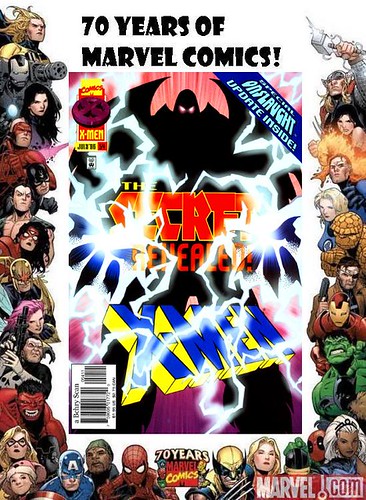
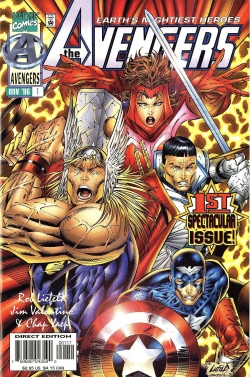
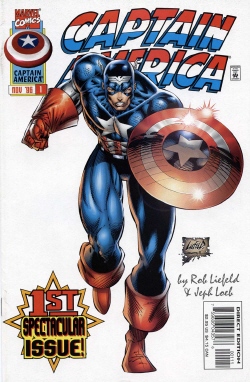
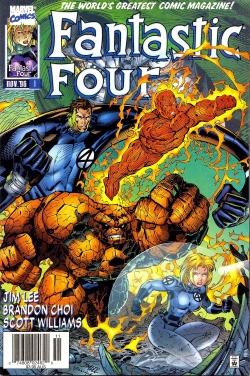
1996 was a crunch year for Marvel. While the X-Titles were doing ok, the Spider-Books were embroiled in the seemingly-everlasting Clone Saga, and the Avengers were just emerging from The Crossing, a crossover event which had seen Tony Stark go evil, the Wasp turned into a real giant-size woman-bug, and many readers jumping ship. Captain America, written at the time by Mark Waid, was well-regarded, but nothing spectacular, sales-wise. And the Fantastic Four had been lumbering along under Tom DeFalco's guidance for years. With sales crashing all over as a result of the end of the speculator boom, Marvel wanted to try something radical.

Their answer was Onslaught, an ultra-powerful mutant (with a dark secret) who tried to destroy the world. A couple of months of group-wide crossovers led to a final battle, in which the Avengers and the FF sacrificed themselves to stop Onslaught. The public, seeing their heroes killed, blamed mutantkind, and the X-Men's lives got that little bit more difficult.

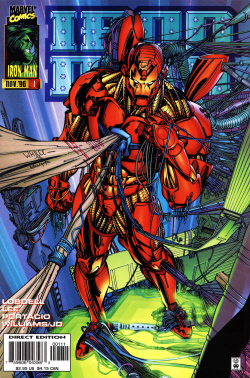
But the Avengers and the Fantastic Four weren't dead. Oh no, not at all. Instead, they faced a worse fate: outsourcing! Marvel hired Jim Lee and Rob Liefeld, founders of Image Comics, to "reimagine" the two teams, in the Image style. So it was farewell to the classic Marvel style, and hello to this...


It worked, after a fashion. Sales went through the roof, and everyone was talking about Marvel again. And that the the books weren't very good didn't really matter. After a year, the books would revert to being written and drawn in-house, with yet another set of #1 issues. And because each restart was accompanied by a bump in sales, we could henceforth look forward to pretty much every Marvel title restarting every couple of years.

In other comics news, the Clone Saga did eventually finish, at the end of this year, accompanied by the return of Norman Osborn. It says something for how much people were tired of the whole clone thing, that the resurrection of Spidey's most famously dead arch-nemesis seemed like a pretty neat idea. 13 years on, and with Norman appearing in pretty much every comic pretty much every month, it doesn't seem like such a winning plan.

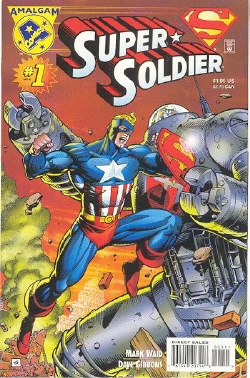
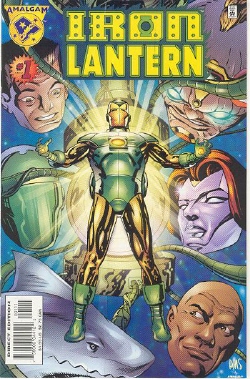
1996 was also the year of Amalgam Comics, in which Marvel and DC Comics collaborated on a shared universe, with characters made up of blends of both companies' heroes and villains.


A novel idea amongst a sea of detritus, Amalgam Comics managed two runs, in '96 and '97, before vanishing without trace.

Thursday, 29 October 2009

70 Years of Marvel - 1992


1992 started out as a good year for Marvel. They had a bunch of superstar artists working on their biggest X-Books: Whilce Portacio on Uncanny X-Men, Jim Lee on the Adjectiveless X-Men, and of course, Rob Liefeld on X-Force. Over in the Spider-Books, Erik Larsen had just taken over the writing and drawing on Peter Parker: Spider-Man, replacing Todd McFarlane, who'd gone off in a bit of a strop. They even had a successful relaunch of Guardians of the Galaxy, produced by Jim Valentino. Good times, eh?

It wouldn't last. Turns out that strop that Todd was having was a bit more serious than expected. Rather than going over to DC, or coming back, cap in hand, McFarlane persuaded Portacio, Lee, Leifeld, Larsen and Valentino to go start up their own company with him. Thus was Image Comics born. And while the Image boy's departures did allow new talent like Andy Kubert to get a regular artistic gig, there wouldn't be the superstar mentality of the early 1990s for a good long time.

1992 also saw the Rise of the Midnight Sons, in which Marvel decided to make a group out of all of its darker books. Since, at that point, it only actually had one "darker" book - Ghost Rider - that meant launching a whole line of new books:
Darkhold: Pages From The Book Of Sins - in which dark forces take an ancient grimoire, cut it up, and give pages out of it to unsuspecting bystanders, unleashing all manner of evil.
Spirits of Vengeance - a team-up book between the 1970s Ghost Rider and his 1990s replacement.
Morbius The Living Vampire - the not-quite-a-vampire occasional Spider-Man foe.
Nightstalkers - former Tomb Of Dracula stalwarts, Hannibal King, Frank Drake, and Blade, who teamed up to fight evil. Imagine Angel Investigations, but with less hair product.
Eventually, Dr Strange would be brought into the Midnight Sons fold, but by that time, (1994), the line was dying on its arse, and Marvel would be moving onto its next good idea. More on that later.

As if that wasn't enough, 1992 was also the year in which Tony Stark constructed what would non-ironically be called the War Machine armour. Golly.

Tuesday, 27 October 2009

11 of the Best: Cosmic Sagas

Since we're talking about cosmic comics, here's what I regard as the most unmissably unmissable space tales. Long-term readers of comics may find little to surprise them here...


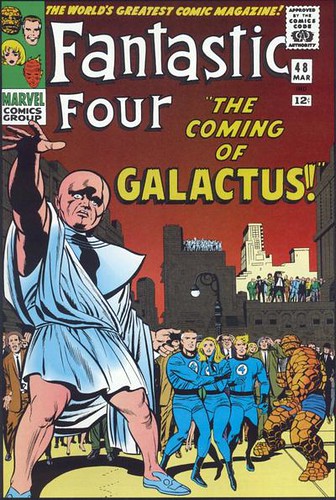
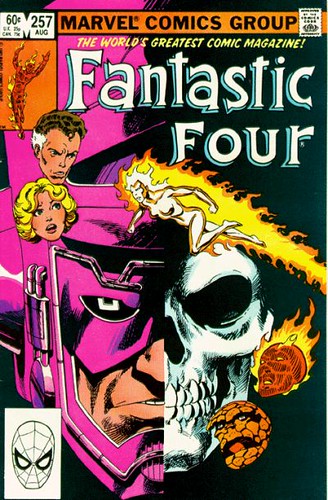
The Coming Of Galactus, Fantastic Four, 1966 (Lee & Kirby)
Jack and Stan had already introduced us to the world beyond, with the introduction of the Skrull Empire in the early issues of FF, but this was the biggie. A god-like being turns up, heralded by a cosmic-powered sentinel, the Silver Surfer, and the Fantastic Four know this is bad news, because the sworn-never-to-interfere Watcher shows up to warn them. Marvel's first truly epic storyline.


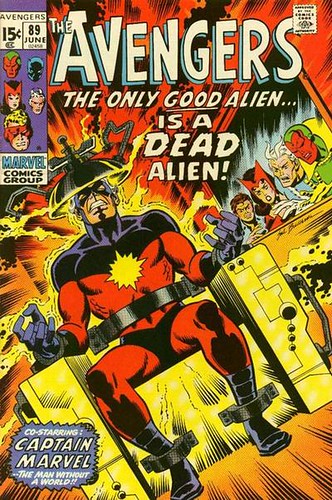
The Kree-Skrull War, Avengers, 1971-72 (Roy Thomas, Sal Buscema, and Neil Adams)
Also introduced in the pages of the FF, the Kree were the great space power of the galaxy, with the Earth considered too remote to interest them. That changed when the Kree's centuries-old conflict with the Skrull Empire spread to the Earth's solar system. The Avengers were drawn, via their ally, Captain Mar-Vell, into the war, and fought to prevent the Earth itself being an innocent bystander of the battle.


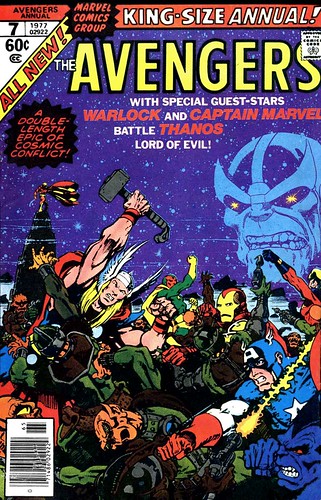
The Thanos War, Strange Tales, Avengers and Marvel Two-In-One, 1977 (Jim Starlin)
The mad god, Thanos, had been lurking on the fringes of the Marvel Universe for a few years, and had even gotten hold of a Cosmic Cube once, but this was his big play for universal domination. Obsessed with death, Thanos had obtained the Infinity Gems, which he intended to use to destroy the universe. The Avengers, Captain Marvel, and Adam Warlock would stand against him, and one of them would not be walking away from this battle.


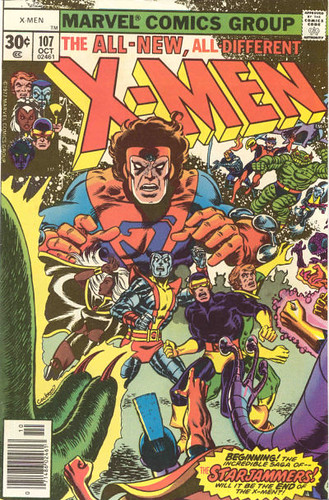
The Phoenix Saga, X-Men, 1977 (Chris Claremont, Dave Cockrum, and John Byrne)
This was the X-Men's first big space adventure, in which Professor X's latest floozy, Princess Lilandra, was kidnapped by her insane brother, the Shi'ar Emperor, D'ken, and the team went to rescue her. Notable for the first appearance of the Starjammers, and the first time Jean Grey was allowed to unleash the power of the Phoenix, this also saw the introduction of the Shi'ar as the other great star empire, one powerful enough to give even the Kree pause in their expansionism.


The Trial Of Galactus, Fantastic Four, 1983-84 (John Byrne)
After being saved from certain death by Mr Fantastic, Galactus finds the Skrull homeworld, and eats it. As well as incurring Reed Richards the displeasure of pretty much every sentient being in the universe, this throws out the balance of power in the galaxy, crippling the Skrull Empire, and setting the stage for...


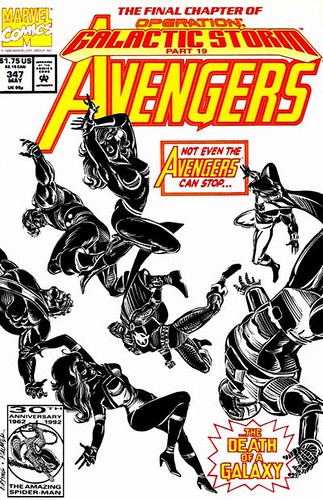
Operation: Galactic Storm, various Avengers books, 1992 (Bob Harras, Steve Epting, Roy and Dann Thomas, Dave Ross, Mark Gruenwald, Rik Levins, Greg Capullo, Gerard Jones and Jeff Johnson)
In which the Kree and Shi'ar Empires go to war, with the Avengers stuck in the middle. Condemned at the time as a cheap attempt to cash in on Operation: Desert Storm (why, and how, anyone would "cash in" on a war is a bit of a puzzler, I have to say), O:GS is notable for the uncompromising attitude of some of the Avengers, an attitude for which the editorial staff have to be commended: no bottling the tough issues here. Of course, this uncompromising attitude is probably where the current "dickish" Iron Man comes from, so it's not all good...


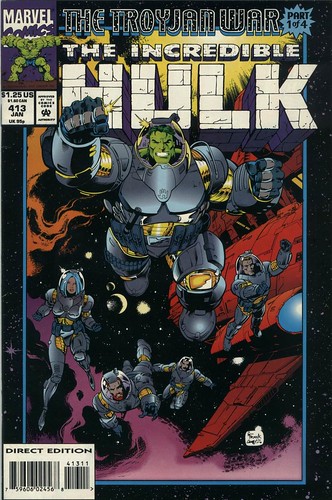
The Troyjan War, Incredible Hulk, 1994 (Peter David and Gary Frank)
Maybe Peter David was hoping to create the next big alien race, or maybe he was just looking for a villain who could give the Hulk a run for his money. Either way, this wasn't the most successful launch, since the Troyjans haven't (to the best of my knowledge) showed up anywhere since the Hulk led his then-allies, the Pantheon, against the Troyjans and their warlord, Arm’chedon (Armageddon, get it?). However, there's a lot going on in this serial, with appearances by both the Silver Surfer and the Starjammers, not to mention a battle royal between the Hulk and the Troyjan's champion, Trauma. Great stuff.


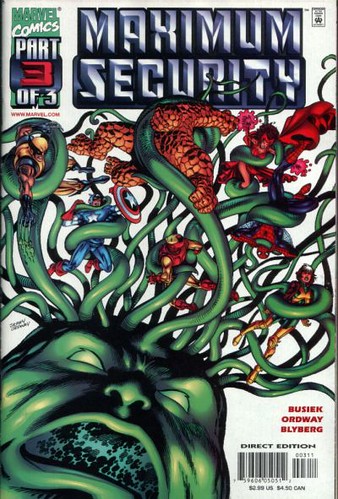
Maximum Security, various titles, 2001 (Kurt Busiek and Jerry Ordway)
One of the wackier storylines of recent years, Maximum Security saw various alien governments, led by the Shi'ar, turn Earth into an impromtuo penal colony and exile their worst criminals there. The prisoners, regretably, include Ego, the Living Planet, who proceeds to try to take over the world. Bizarre, but great fun, which is all you can ask for in a comic, particularly a 21st century comic...


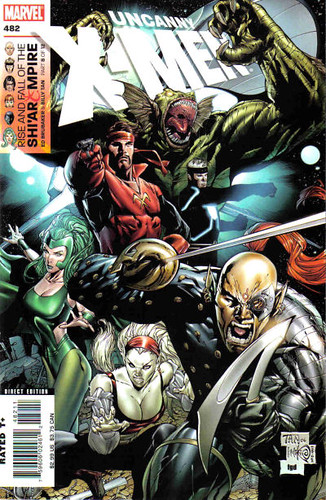
Fall And Rise Of The Shi'ar Empire, Uncanny X-Men, 2006-07 (Ed Brubaker, Billy Tan, and Clayton Henry)
In which Havok pursues his long-lost brother, Vulcan, into deep space, to try to stop him from taking his revenge on the Shi'ar for killing their mother. Another run which disrupts the balance of power in the galaxy, with Vulcan declaring himself Shi'ar emperor and threatening to cause chaos. Mind you, perhaps the Shi'ar can count themselves lucky; after all, they at least managed to avoid...


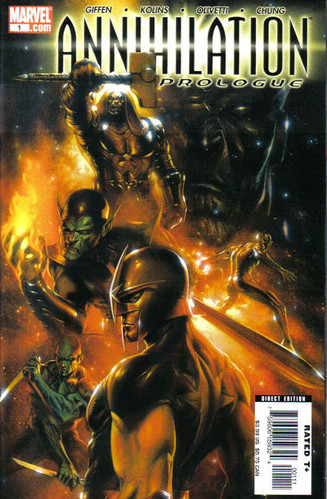
Annihilation, 2006-07 (Keith Giffen and Andrea Divito)
A dark power strikes in the galaxy, sparking an interstellar war, which sees the Skrull Empire crushed, the Kree severely weakened, and the Silver Surfer once again swearing loyalty to Galactus. Just about every one of Marvel's cosmic powers showed up in this maxi-series, a title which has done more to open up the expanded Marvel Universe than pretty much anything else in the past forty years.


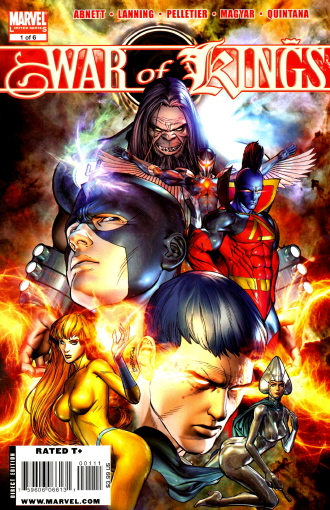
War of Kings, 2009 (Dan Abnett, Andy Lanning, and Paul Pelletier)
Abnett and Lanning have been building on Annihilation for some time now. They used that title as an opportunity to bring Nova back in his own title. They wrote the sequel, Conquest, in which the Phalanx, a long-forgotten X-Men foe, conquer the Kree, and they used that story to launch their own version of the Guardians of the Galaxy, a book which has made a star of a talking raccoon. Finally, they had the Kree, now led by Black Bolt and the Inhumans, go to war with the Vulcan-led Shi'ar, bringing together pretty much all the cosmic events of the past few years. Since Marvel seem to have worked out that there's money to be made out of these cosmic events, expect Abnett and Lanning, and others, to continue mining this seam for some time to come.

(This post mostly recycled from an earlier post on my other blog.)

Friday, 16 October 2009

70 Years of Marvel - 1983


1983 was a big year for Iron Man. Tony Stark, the original party animal, had always liked a drink, but this was the year that a business rival, Obadiah Stane, took advantage of Stark's weakness for the sauce, creating a set of circumstances to push him deep into a bottle. Consequently, Stark became bankrupt, losing his company, and his pilot / sidekick, Jim Rhodes, was forced to take over using the armour. Stark spent most of 1983 in various states of drunkenness, and it would a couple of years before he'd be back in the Iron Man suit. Rhodes, meantime, would get his own suit of armour, dubbed War Machine, and spend the next 25 years participating in the storylines deemed too racy, adult, or violent for Iron Man.

Meantime, 1983 also saw Starfox, half-brother of Thanos, make his debut as superhero, and saw Jack Monroe, retconned sidekick to the retconned Captain America of the 1950s, back in action as the new Nomad. Over in the UK, Captain Britain's sister, Betsy Braddock, was starting out on a path that would end up with her becoming the X-Men's Psylocke. Beta-Ray Bill was being given the power of Thor. Colossus' little sister, Illyana, was becoming ruler of Limbo, in the Magik mini-series. And Rogue, member of the Brotherhood of Evil Mutants, ditched her old gang and went off to join the X-Men.

In the real world, NATO decided to pretend to start World War 3, an exercise known as Able Archer 83, and as a result, the Soviets nearly launched a real one. Whoops.

Monday, 28 September 2009

70 Years of Marvel - 1967

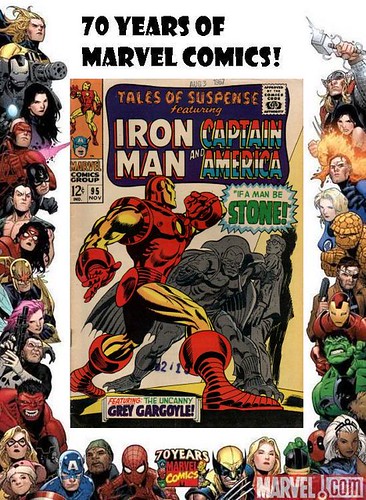
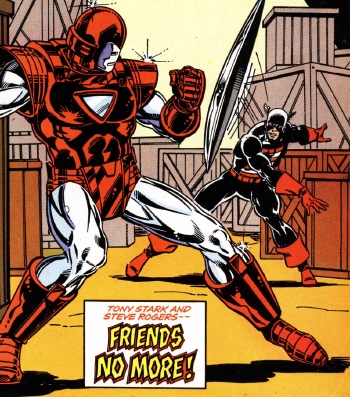
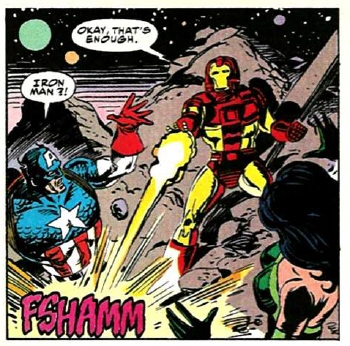
Marvel's other two-hander book of the 60s was Tales of Suspense, in which arch-conservative hero, Iron Man, shared the headline with democratic poster-boy, Captain America, forging a friendship which would last the next 40 years...


Elsewhere in comics, 1967 saw the first appearance of the future X-Man, Banshee, begorah bejesus, as well as the Kree supersoldier, Captain Marvel, and fellow cosmic hero, Adam Warlock, or, as he was known in them thar days, Him. Yes, even by then, all the good names were taken.

In the real world, 1967 saw both America and Russia suffer space-related tragedy, with the destruction of Apollo 1 and Soyuz 1. Most of the Middle East was getting briefly embroiled in the Six Day War, and Concorde was unleashed.

On the telly, Patrick McGoogan was stranded in a Welsh village with a load of posh spies and a giant balloon, in The Prisoner, whilst wheelchair-bound Ironside was cracking San Francisco murders aplenty. At the movies, Mowgli was learning the bear necessities in The Jungle Book, Lee Marvin was leading the Dirty Dozen, and Dustin Hoffman was fending off Ann Bancroft in The Graduate. And on the radio, BBCs 1 through 4 were launched.

Sunday, 7 December 2008

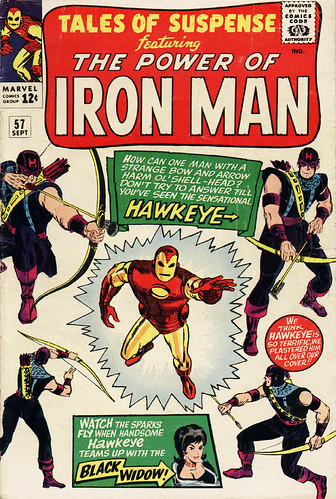
Hawkeye The Marksman!


Tales Of Suspense #57, September 1964.
(By Lee and Heck)


This is it, True Believers! You've waited long enough, and now, finally, today, we meet Hawkeye the Marksman! He's a crack shot with that bow, and I just bet a man with a bow, and arrow, and plenty of sassy attitude can give Iron Man a run for his money! Off we go...

Our tale begins with millionaire industrialist Tony Stark inadvertantly asking faithful secretary Pepper Potts out on a date. All that money, Tony, and you can't score a night out with someone who doesn't rely on you for her pay-check? Shame on you.

Anyway, Tony, multi-billionaire mogul who can, thanks to all that money of his, go pretty much anywhere at the drop of a hat, takes her to ... Coney Island. Verily, Tony, thou art the last of the big spenders.

(In Tony's defence, he's supposed to have been setting Pepper up with his chauffeur, and is only on this date due to his own incompetence, and even a billionaire doesn't want to spend too much money on a date he didn't want in the first place, but still, it seems a bit shabby.)

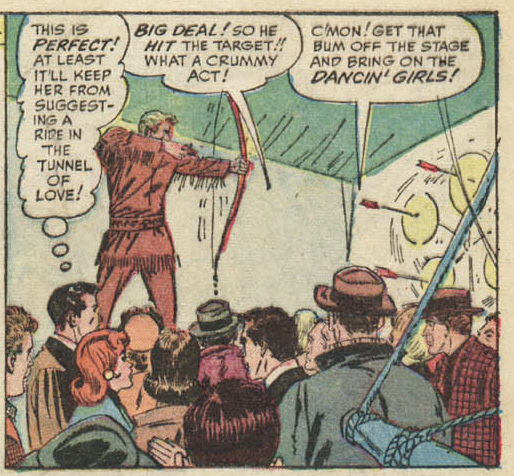
Tony and Pepper take in a few shows, including this exciting act:
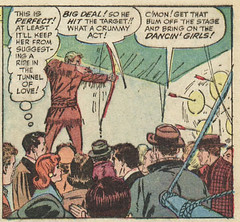

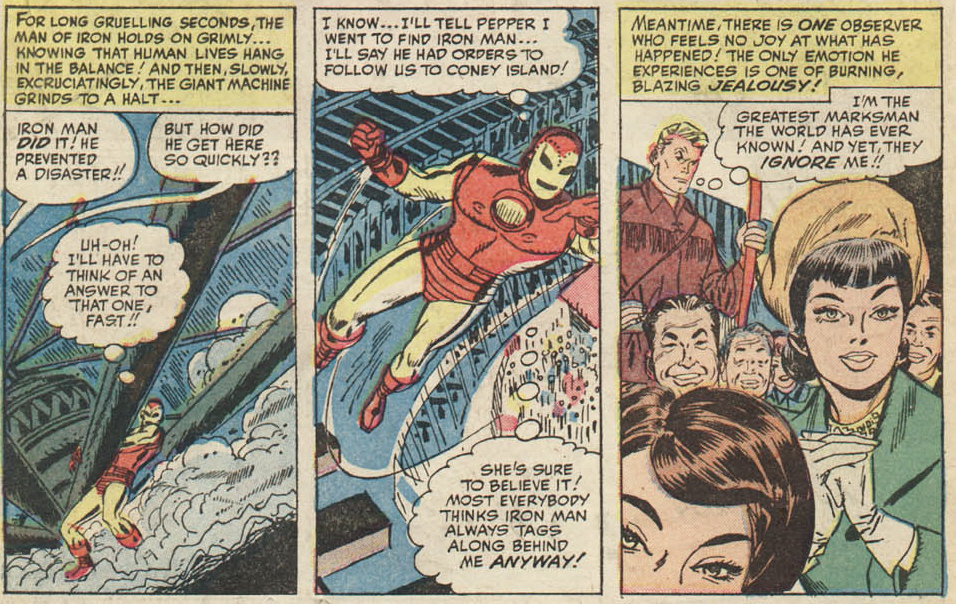
Before Hawkeye can be booed off the stage by the restless crowd, Coney Island suffers one of its occasional disasters, as one of its rides goes wild and falls to bits in mid-spin. Iron Man to the rescue!
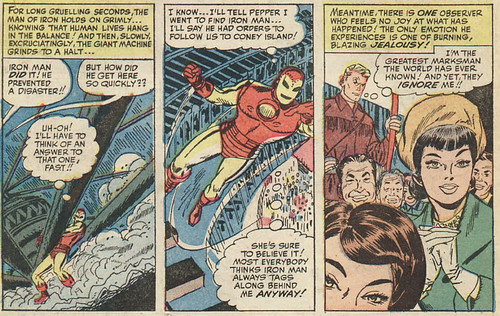

Yes, folks, while all others are impressed, Hawkeye is seething with envy over the acclaim that New Yorkers have for Iron Man (this month, at least - they'll turn on him soon enough). He reaches the obvious conclusion that if they dig the guy in power-armour, they're going to go wild for him, if he can just choose the right outfit.
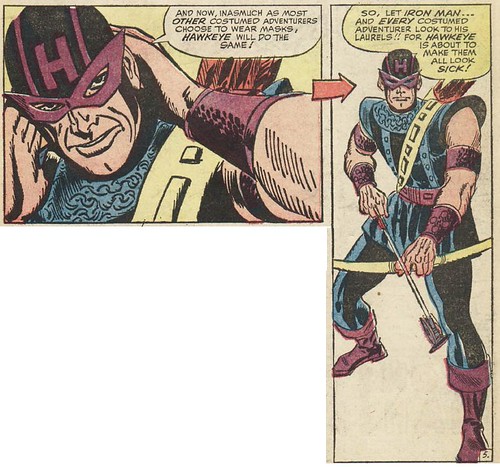

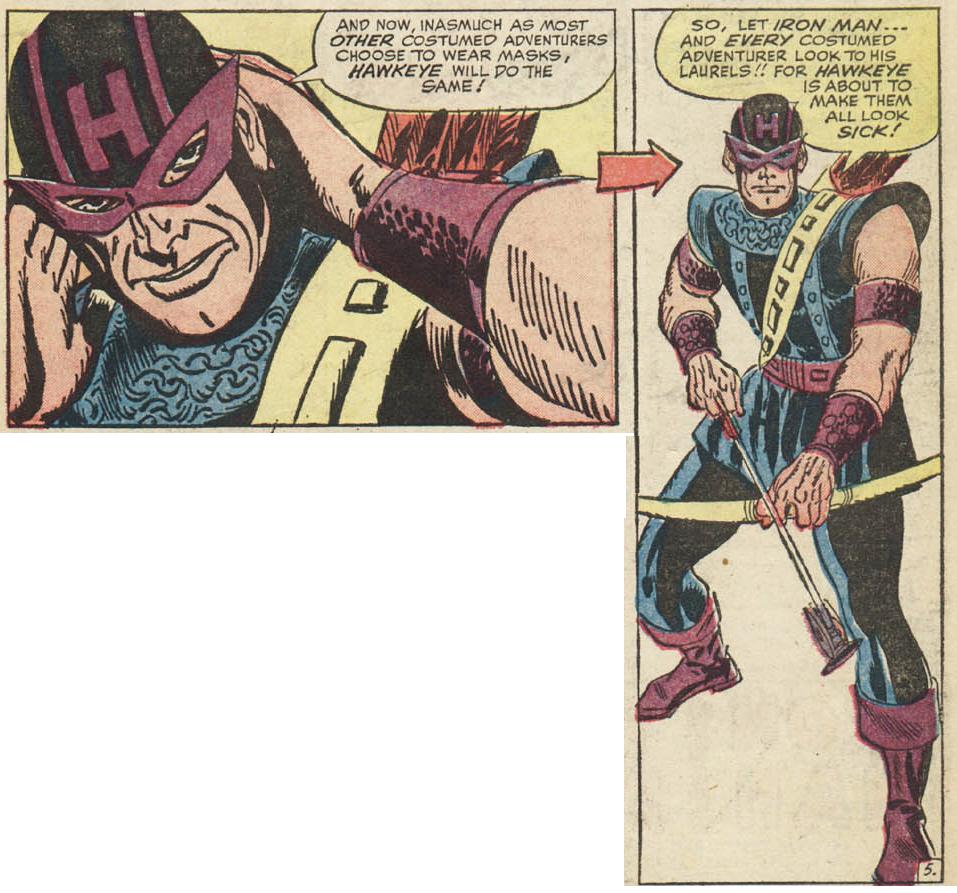
In his nice new clothes, Hawkeye goes out seeking fame and fortune. Unfortunately for him, the writer has it in for him.


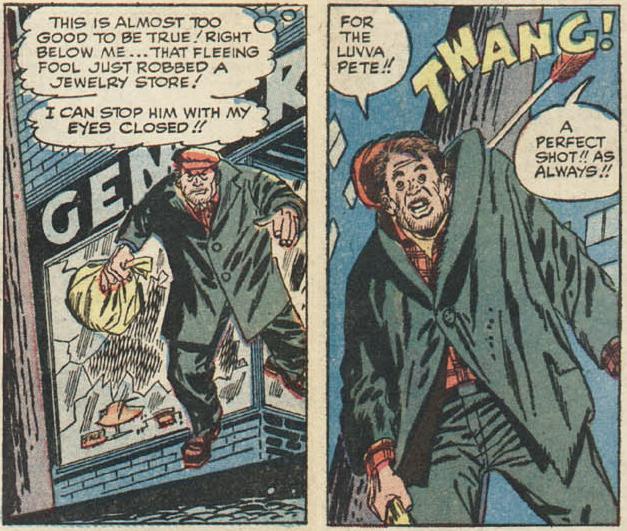
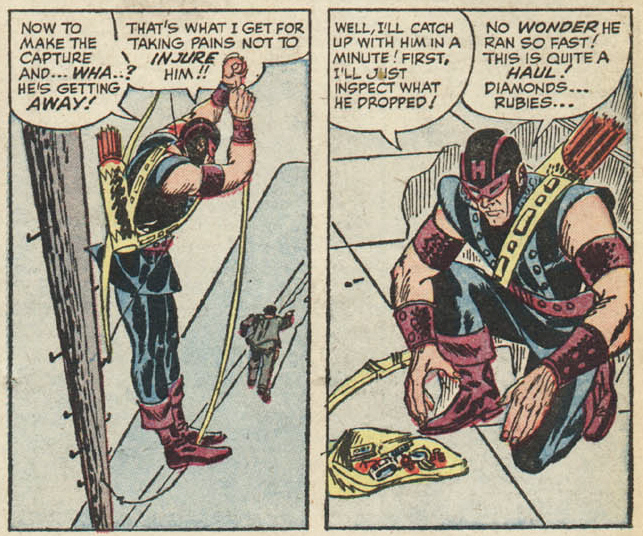
So far so good. Nothing establishes street cred like nabbing a ne'r do well in a checked shirt.


Not so good, the bad guy's getting away, but at least he left the loot behind.


Arse. Now, in his place, I'm fairly sure I'd wait for the cops to catch up, explain to them what had happened, and place my faith in the commonsense of the police. Unfortunately, this is the pre-Serpico NYPD, so Hawkeye pretty much knows he's going to jail if he hangs around. So he flees the scene, leaving the cops to return the loot, or pocket it, depending on their mood.

In the coincidence-filled world of Marvel, Hawkeye runs straight into the Black Widow, a Russian spy who's twice taken on Iron Man, lost both times, and is looking for a sucker to set against Shellhead. Roll up, roll up..!

At the Widow's urging, Hawkeye breaks into Stark Enterprises, blows some stuff up, and gains Iron Man's attention.
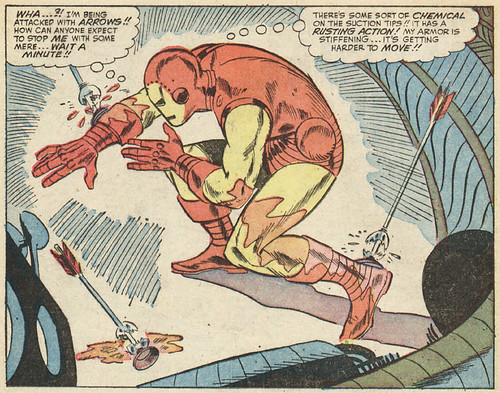

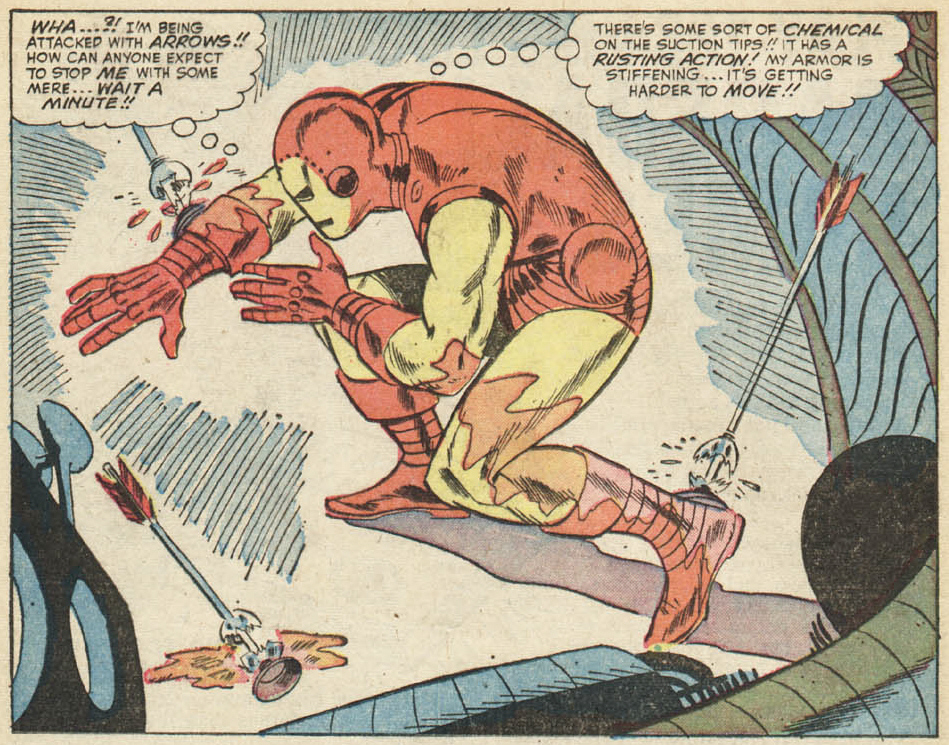
Yes, the power of Iron Man is nothing compared to the power of Rust! Stark is forced to ditch his armour and dig out a spare set, whilst Hawkeye, rather than pressing his advantage and hunting him down, chooses to steal some of his kit, for later analysis.
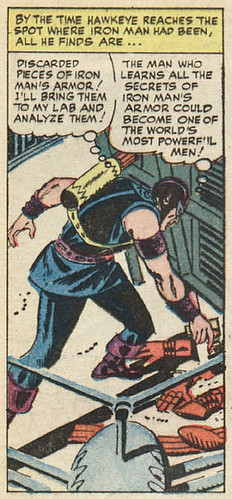

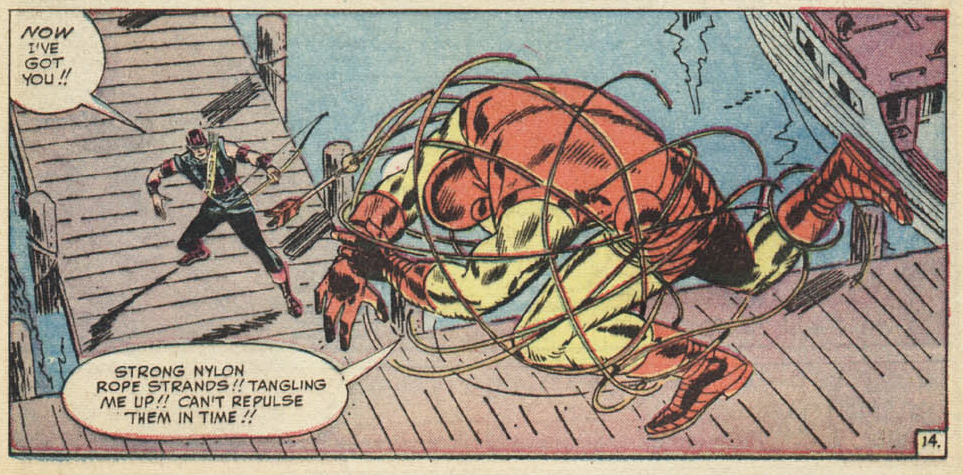
Wow, that transition from wannabe hero to wannabe world dominating supervillain was a bit sudden, wasn't it? That Black Widow must have something special going for her. Anyhoo, Iron Man chases down Hawkeye, blows up his car, and ... can barely hold his own against him.
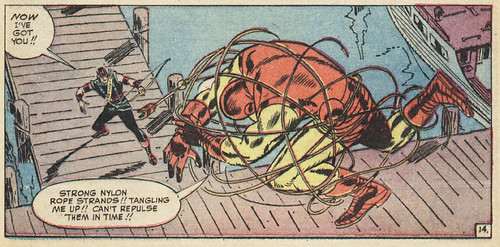

Rust, rope, is there anything your multi-million pound suit can cope with, Tony? Bullets? Tickling sticks? Sharpened fruit?

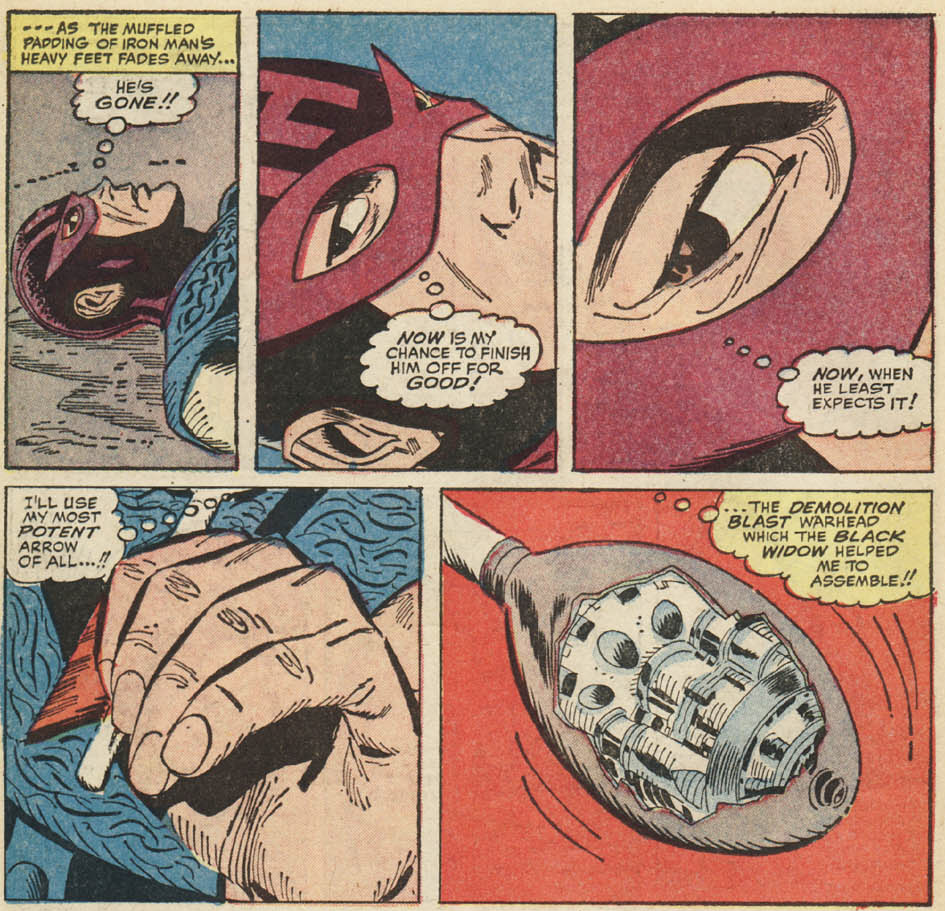
By some miracle, Iron Man manages to overpower the man with the bow and arrow, but it's not over yet.


Now, that's just mean, Hawkeye. Of course, the questions it raises about his moral turpitude pale in comparison to the question of why, if you have a demolition blast arrow which can destroy Iron Man, you didn't just shoot him with it in the first place, you big dummy?!?
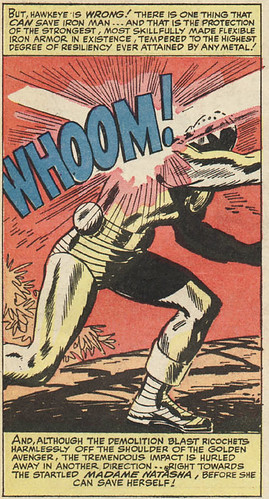

Oh, that's why. Because the demolition arrow just plain doesn't work. More research needed next time, Hawkeye, old man.

So, yes, hilariously, Hawkeye almost kills the Black Widow with the arrow designed by the Black Widow to kill Iron Man. Hawkeye and the Widow escape whilst Shellhead is too stunned to chase them, and, you know, I don't think we've seen the last of either of these villains.

Saturday, 18 October 2008

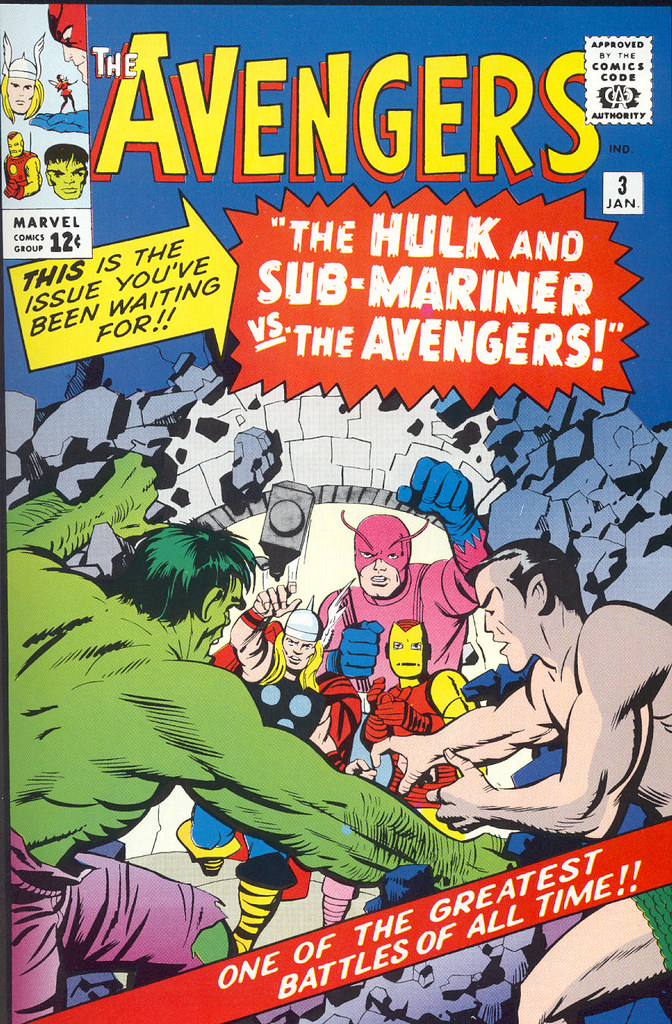
The Avengers Meet ... Sub-Mariner!


Avengers #3, January 1964.
(By Lee, Kirby, and Reinman)


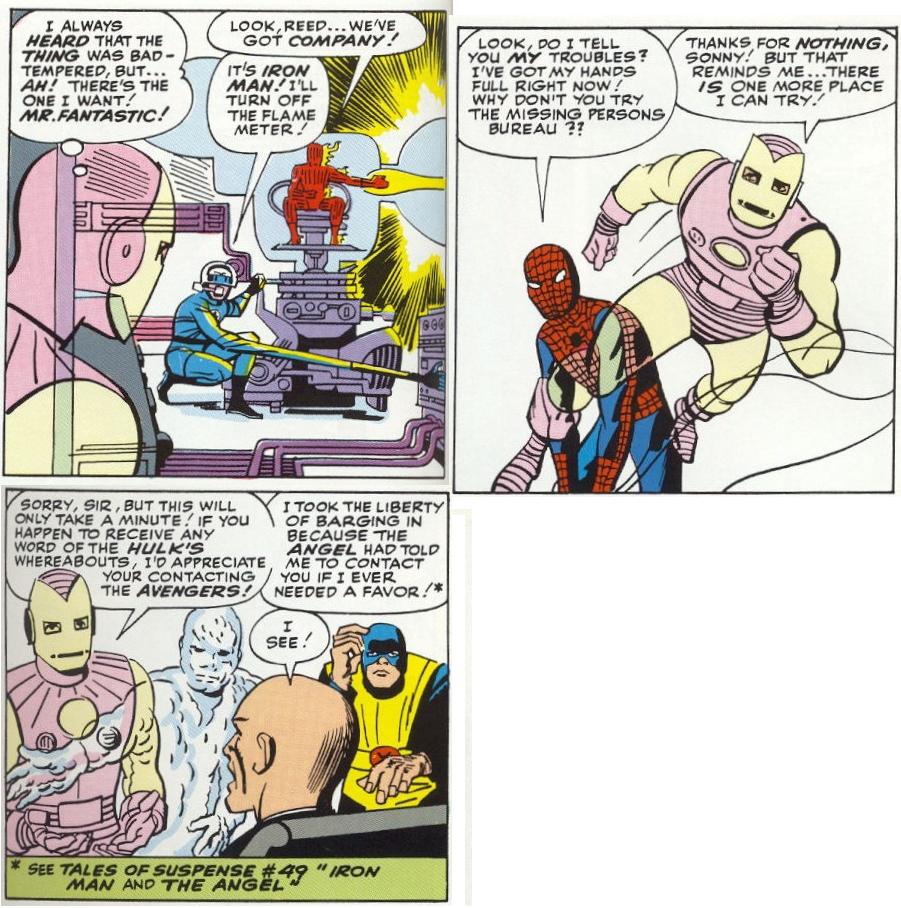
So, where were we? Ah yes, the Avengers, a team consisting of Iron Man, Thor, Ant-Man (now Giant Man), the Wasp, and the Hulk. Only, the Hulk's not much of a team player, so he's quit the team. Needless to say, the Avengers don't want to leave him wandering the deserts of the United States, so they're on his tracks. Cue a few gratuitous cameos:


Yes, the Marvel Universe has quickly become a unified body, in a way that DC rarely managed at that time. We've had cameos, guest appearances, but not yet a full-blown crossover. Watch this space.
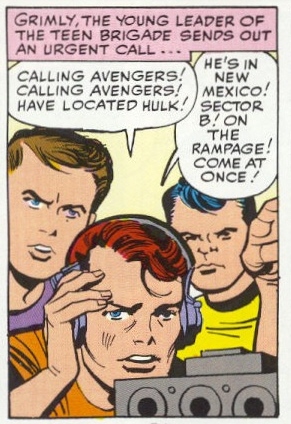
Anyhoo, fortunately, the Hulk's old pal, Rick Jones, has managed to track down the Green Goliath, and he can always be relied on to do the right thing.


Even if the right thing, in this case, is to nark out the guy who saved his life a few months ago. Cheers, Rick..!

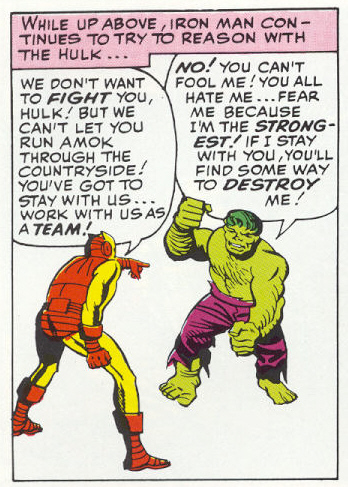
So, the Avengers show up to take down the Hulk, who's not so keen on a reunion with his former co-workers.


He's a shrewd one, that Hulk. He knows better than to trust Tony Stark as far as he can throw him, and history will vindicate that opinion. Naturally, conflict ensues, including an almighty broohaha aboard a speeding train.


Lucky for the Hulk, his cunning flour bomb catches pretty much the only Avenger who doesn't have any way of avoiding being blinded by the smoke screen - if only he had super-lungs or some other get-out.

And in case you were wondering, yes, the Hulk has not yet arrived at his "Hulk smash puny fish man!" persona.

And speaking of puny fish men...


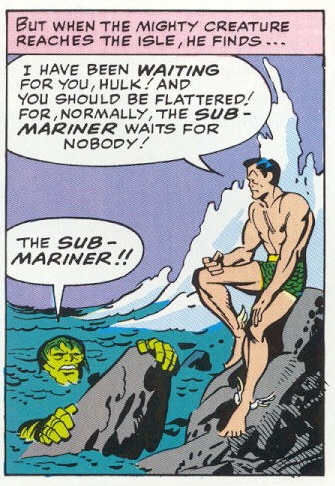
Namor has just (in Fantastic Four Annual #2) been thwarted in his plan to invade the surface world, and has been abandoned by his own people, to boot. And, like the Hulk, he's got a serious grudge against humanity.


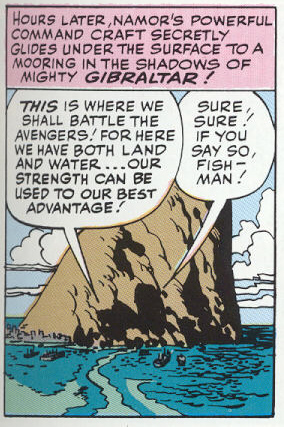
Yes, it's time for a Super-Villain Team-Up! Agreeing to work together to defeat the Avengers, the two rogues start out on stage one of their plan: the invasion of Gibraltar!

You heard me.


You see, Gibraltar has a network of caves under it, filled with military ordinance left over from WW2. Useful if a gang of superheroes turns up to arrest you, I suppose, although I'm surprised that Subby doesn't have any weapons lying around in that underwater kingdom of his.

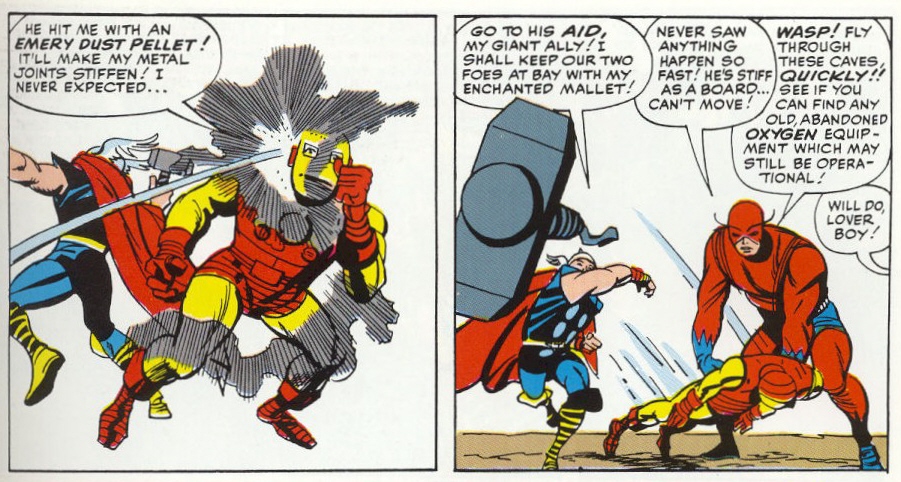
The Avengers waste no time in setting out to confront their foes, but the Sub-Mariner is well-prepped.


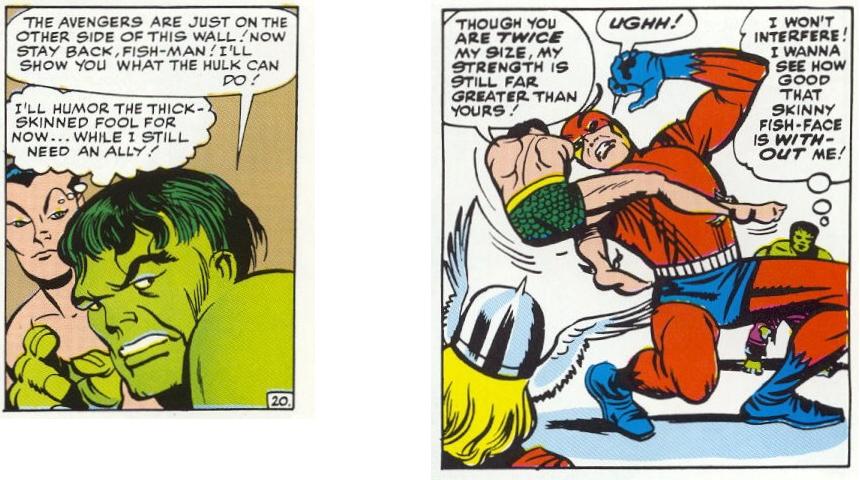
However, no amount of preparation can take the place of team-work, and that, tragically, is what Subby and the Hulk are missing:


Yes, apparently, the Hulk and the Sub-Mariner have been watching too much tag-team wrestling, and are unaware of the benefits of, say, both fighting at the same time.

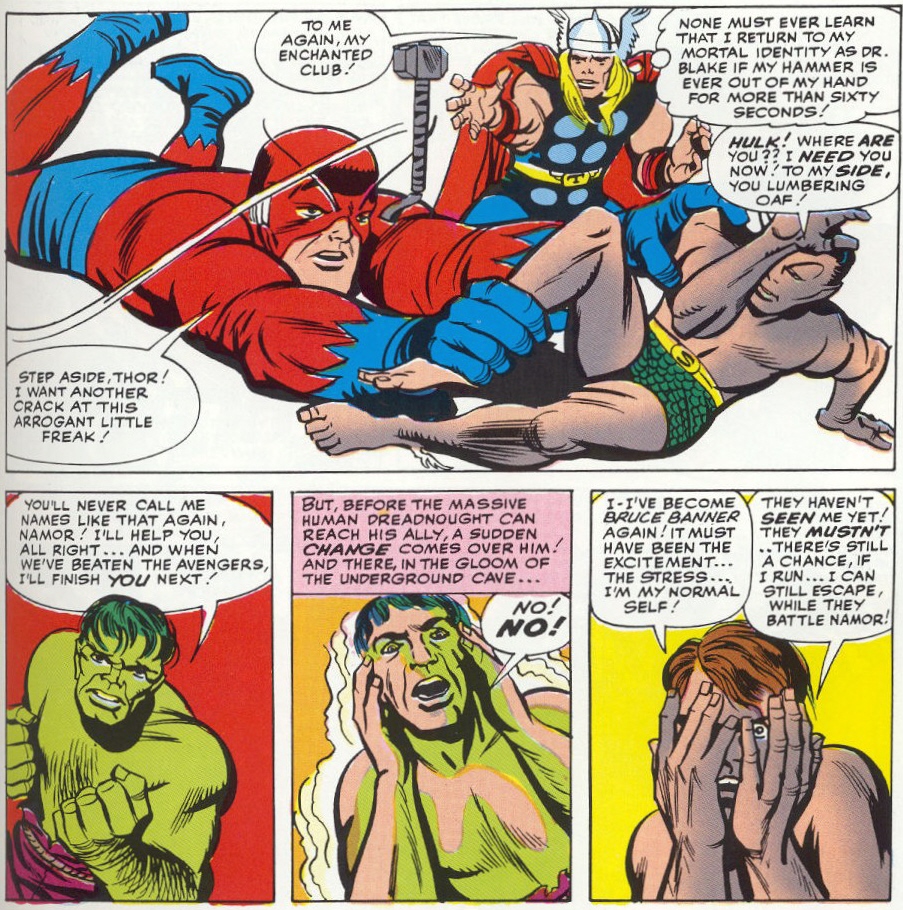
The result is fairly inevitable:


Bruce "Must shout out my secret identity!" Banner flees the scene, whilst Sub-Mariner decides that discretion is the better part of valour.


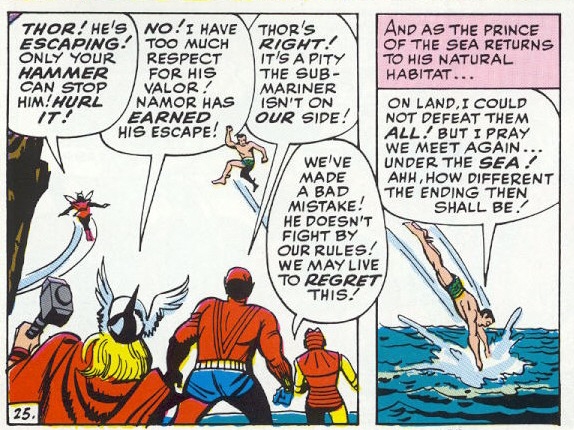
So, if you fight well, Thor will let you go free? That doesn't seem to be a very sensible attitude for the forces of law and order. I'm with Iron Man on this one.