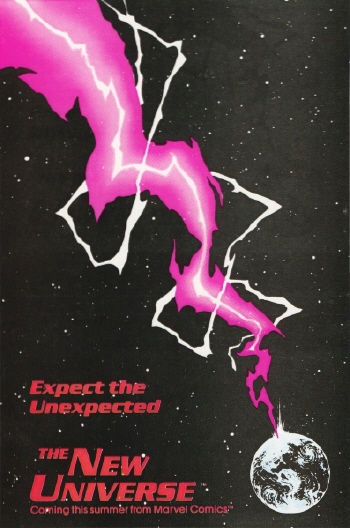
So, as we've previously seen, 1986 saw the introduction of
Jim Shooter's
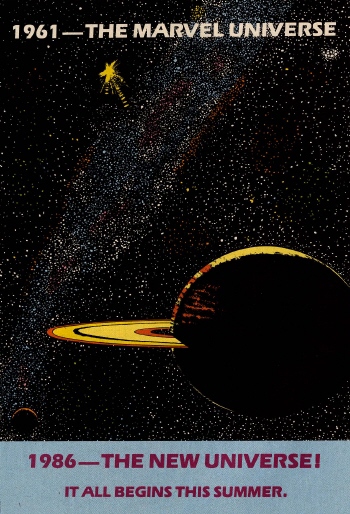
New Universe line, which was, I think, the first attempt by any comics company to launch, from scratch, a whole new universe, with heroes and villains gaining their powers as a result of a mysterious "White Event". We'd later see this sort of thing, again from Jim Shooter at
Valiant Comics, from the launch of
Image Comics, and indeed from Marvel with the
2099 and
Ultimate lines. But this was, in 1986, a relatively revolutionary idea.
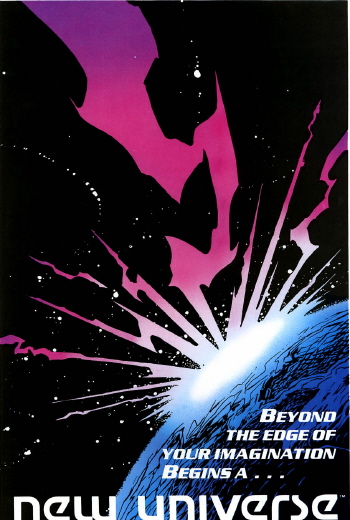
One of the controversies of the New Universe was that, according to legend, Marvel wiped out a swathe of its existing titles to make way for the new books. In actual fact the only books which I can see as being canned in the months before the launch were
Power Man And Iron Fist, a title which had (and I speak as a big fan of Iron Fist) seen better times;
Star Wars, which had lasted several years after the release of
Return of the Jedi;
Doctor Who, something of a niche product (in those days); and
The Thing, despatched, at least in part, so that Jim Shooter could bring Ben Grimm back into the
Fantastic Four fold. Other than that, and a couple of mini-series finishing up, there wasn't much in the way of dead wood being cleared in the months up to the launch of the first New Universe books.
Famously, Shooter fell foul of Marvel's new managment team, and so his plan to hire top talent to launch his new line was thwarted: oddly, no-one who was anyone wanted to write or draw a brand new, untried-out book, especially as there was no money to pay anyone. What we ended up with was a host of books written by Marvel's editorial team, and drawn by those who really needed the work.
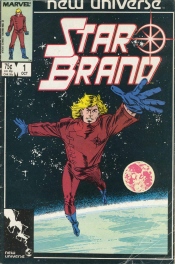
Star Brand
Shooter himself wrote, whilst John Romita Jr, one of the few willing volunteers for the project, drew this, a tale of an ordinary man who suddenly gains superpowers. One of the more criticized books, described as a wish fulfilment book for Shooter himself, Star Brand was nonetheless one of the more lasting concepts, being picked up in the Marvel Universe proper long after the New Universe was long gone.
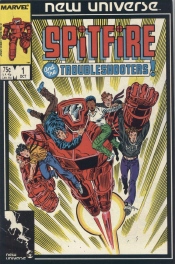
Spitfire And The Troubleshooters
Gerry Conway and Herb Trimpe came up with this one, based around the adventures of a group of MIT students and their battle suit
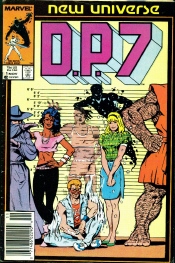
 D.P.7Mark Gruenwald
 and
Paul Ryan wrote the entire 32 issue run of this one, concerning a group of suddenly-superpowered folk who, rather than be cut up like lab rats, go on the run. If you're a fan of the
X-Men and
The Fugitive, this might be your kind of thing.
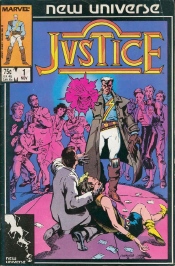
JusticeBrought to us by
Archie Goodwin and
Geoff Isherwood, Justice concerned the exploits of an alien who came to Earth to hunt down the evil. At least it did, until
Peter David was hired to retcon Justice into a delusional government agent instead. Amazingly, this book lasted 32 issues.
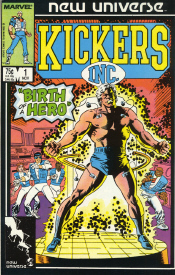
 Kickers, Inc.
At the same time that
Tom DeFalco and
Ron Frenz were building a rep for themselves as the creative team on
Amazing Spider-Man, they were also working together on this book, about a team good samaritans, led by a superstrong ex-footballer. As good as it sounds, this book managed 12 issues, before being put to death, by which time DeFalco and Frenz had left the book to take on the adventures of a golden-haired Asgardian.
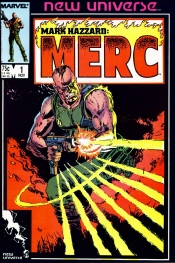
Mark Hazzard: MercWritten, at first, by Peter David, and drawn, at first, by
Gray Morrow, this dealt with, as you may guess, the adventures of an appropriately named mercenary. Certainly different to normal superhero fare, it was barely related to any of the other New Universe books, which may explain why it lasted only the dozen issues.
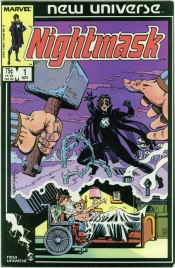
 Nightmask
Another book by Archie Goodwin, with a rotating cast of artists that included future workhorses,
Ron Lim and
Mark Bagley, among many others. Lasting just the twelve issues, this one began with Keith Remsen, comatose since an explosion, being awoken by the White Event, and gaining the power to enter people's dreams, like the
Sandman, only wearing a domino mask, for some reason.
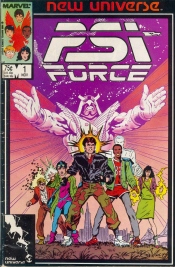
Psi-ForceA group of telepaths on the run from American and Russian secret service agents, Psi Force was the creation of Archie Goodwin (again) and
Walt Simonson, though neither of them showed up to produce an issue. Notably, this did see some very early comics work from top 90s talent,
Fabien Nicieza, who wrote half of its 32 issues.
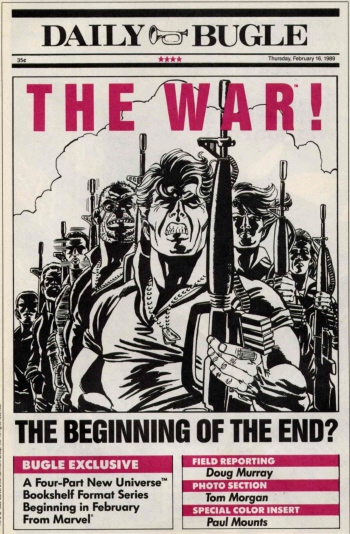
After various attempts at tinkering, including the departure of Jim Shooter, the slimming down of the books, and a couple of "event" books, the N
ew Universe line was somewhat unceremoniously killed off in the summer of '89, its titles replaced with a swathe of new books:
Quasar; a second volume of
What If?; and new titles for
She-Hulk,
Nick Fury and
Moon Knight. The age of experiment was over, and it was back to stripmining Marvel's history, for the next few years, at least.