Showing posts with label Amazing Spider-Man. Show all posts

Monday, 2 November 2009

Oooh! Shiny!

The mid-90s saw the comic speculator boom reach its crescendo, as a whole bunch of stupid people decided that, because Amazing Fantasy #15 and Detective Comics #27 were worth a fortune, then all comics would eventually be worth a fortune. These stupid people went forth and bought a shedload of comics, which they then either bagged and tagged, to sell in the future once said comics had become valuable, or, hilariously, sold them to even more stupid people, who believed that because the comics were being bought in large numbers, they must be worth lots of money NOW. Before anyone could realise these spectacular profits, the bubble burst, the speculators went on to the next big thing (pogs, probably, or trading cards), and comic sales dropped like a stone, taking most of the comic shops with them. Before you laugh, bear in mind this sort of "logic" is pretty much exactly what caused the house-buying boom of the last few years, and you saw how well that turned out.

The rise and fall of the speculator market can be symbolised by looking at the use of foil covers in comic books. Bear with me.


In 1991, Silver Surfer #50 came out. This book featured a battle between Surfy and the reborn dark titan, Thanos, and was a prelude to the Infinity Gauntlet, a cosmic event which touched on most of the Marvel Universe (except the X-Books, which for some reason managed to dodge such things). Some bright spark at Marvel decided to celebrate this milestone issue, by issuing the book with a silver foil cover.

I imagine it did well, I recall friends being excited by the (really not done justice by scanners) cover. In any case, Marvel followed this up the very next month with a glow-in-the-dark cover on Ghost Rider #15.


Nice enough, I'm sure you'll agree, but, really, why the need for a gimmick cover? This issue did feature a confrontation between the 90s Ghost Rider and his 70s equivelent, but it was the concluding part of a three parter, and not even a particularly good three parter at that.

1992 saw Marvel issue a few more books promotional covers Most of them seem justifiable enough:
Amazing Spider-Man #365, Spider-Man #26 and Spectacular Spider-Man #189 all celebrated Spidey's 30th anniversary with neat little holographic panels.
Hulk #393 commemorated the Hulk's 30th anniversary and revisited his origins.
Guardians of the Galaxy #25 featured the 31st century heroes battling Galactus.
Spider-Man 2099 and Ravage 2099 introduced the world of tomorrow.
And, er, Silver Sable #1 celebrated the bounty hunting blondeshell getting her own book at last.


In 1993 , Marvel were churning out the gimmick covers, on, by my count, 44 comics. Some, such as the Avengers and the X-Men's 30th anniversary, were reasonable. Then there were such "essentials" as Namor #37, which celebrated Subby getting a new costume. Or Fantastic Four #371, in which the Human Torch accidentally set fire to Empire State University. Or Venom: Funeral Pyre, in which the world's most overrated supervillain takes on the Punisher (spoiler: nobody dies). By 1994, just about every comic had a gold, silver, platinum, 3D, die-cut, prismatic cover, or it felt like it. Every anniversary, no matter how trivial, every first issue, every "landmark" issue, had a pretty cover, and an inflated cover price to match. Sales were spiking all over the place, based not on how good the books were, but on the relative "buzz" generated by Excalibur #75 or Nova #1.


By 1995, the speculators were getting tired, and by 1996, most of them had vanished off in search of the nearest shop selling Magic: The Gathering cards. Other than a couple of Marvel 2099 books, the foil cover phenomenon vanished without trace virtually overnight.


It would be a good long while before Marvel would try another attempt at getting those speculator dollars, through the use of variant covers on books. A glance at the shelves of your nearest comic shop will show that Marvel doesn't really seemed to have learned any lessons from the 90s speculator boom, as just about every comic out at the moment is available with at least two covers. Disaster lies ahead...

Saturday, 17 October 2009

My First Comics

I may never know which Borders comics fan's mum decided to turf out his November and December-dated Marvel comics, but it was my good fortune that, rather than binning them, she instead donated them to one of the stalls at the Liberal Party's pre-Christmas Bazaar. At the event, where I was dragged by my mum and dad, not only did I get to meet the impressively-statured Cyril Smith, I was confronted with a selection of comics of which, until then, I was sadly unaware.


Alpha Flight #4 & #5 (both by John Byrne)
Alpha Flight #4 featured the tail end of a multi-parter in which the so-called Master of the World attempted to conquer the world, using Marrina the Fish-Girl. It also featured the Invisible Girl and Sub-Mariner, and introduced the idea of Aurora's multiple personality disorder. Issue #5 featured the dwarf, Puck, investigating a drug-smuggling ring based out of a hospital. For a comic featuring only one character I'd even heard of, Alpha Flight had me hooked from the start.


Fantastic Four #260 & #261 (both also by John Byrne)
FF #260 introduced me to the FF's nemesis, Doctor Doom (I may have been aware of him from things like the Spider-Man cartoons, but it would be a very vague awareness), and, before the end of the issue, had killed him off, in a battle between the Silver Surfer and Tyros. This was also the end of a multi-parter, but was also reasonably straightforward to fathom. Alpha Flight #4 was set immediately between #260 and #261, introducing me to the idea of crossovers between titles. #261 had the FF off in space, bumping into the Watcher, and had the team trying to justify not having let Galactus die in an earlier issue. This was a bit of a mystery, but by the end of the book, I pretty much understood what it was all about. The issue also featured a recap of the FF's origin, which was handy for newbies like me.


Amazing Spider-Man #246 & #247 (by Roger Stern and John Romita Jr)
ASM #246 was, essentially, an imaginary story, in which J. Jonah Jameson, Mary Jane Watson, the Black Cat, and Spidey himself daydreamed about their perfect day. Oddly, whilst Jameson and the Cat's dreams ended well, neither Mary Jane or Peter Parker were able to sustain their delusion, suggesting that both have some psychological issues to deal with. #247 featured Spidey teaming up with the fabulous Frog Man, a hunt for the Hobgoblin, and a mystery villain, Thunderball (of the Wrecking Crew). It would be years before I would find out who Thunderball is, and I have no idea to this day about Frog Man. The Hobgoblin was another story, of course.


Spectacular Spider-Man #84 (by Bill Manto and Dave Simons) and #85 (by Mantlo and Al Milgrom)
PPTSSM #84 featured Spidey hunting down a gang of child abductors, and was a purely self-contained story. #85, on the other hand, had the Hobgoblin show up to take on Spidey and the Black Cat. It also, handily, showed the story so far of the Hobgoblin, and featured Peter Parker having a get together with his old college friends, including Harry Osborn, which in turn introduced me to the history of the Green Goblin, which made Spider-Man's obsession with the Hobgoblin a lot more explicable.


Avengers #237 & #238 (both by Roger Stern and Al Milgrom)
Avengers #237 featured Spider-Man trying out for the team, an event alluded to in Spidey's own book, and had the Avengers fighting a whole load of supervillains in Project Pegasus. Looking back, I'm not sure why I accepted supervillains being imprisoned with their costumes on, but it's not something that gave me cause for concern at the time. Issue #238 had the Vision, in a coma due to an earlier battle, recover unexpectedly, showed the She-Hulk househunting, and featured a last-page appearance by Tigra and the ghost of Spider-Woman, the last of which confused the heck out of me.


Captain America #288 (by JM DeMatteis and Mike Zeck)
Set in the future world of 1993, this featured Cap teaming up with the cyborg, Deathlok, to take on the ruler of a destroyed New York. This was pretty much double-dutch to me at the time, and since I didn't have the next issue, it would be a long time before I'd find out how Cap stopped the imminent destruction of the world.

Daredevil #202 (by Dennis O'Neil and William Johnson)
This book had Matt Murdock's firm hired by an African tribe do do PR for their boss, Micah Synn. Micah turns out to be a nutjob, prone to dangling policemen out of windows. As a one-shot, it does a fine job of introducing DD and his significant others, and as an introduction to Micah Synn, it made me want to read more about him, which handily was what Denny O'Neil intended.


Defenders #125 (by JM DeMatteis and Don Perlin)
My first issue of Defenders featured the departure of the original team, the wedding of Patsy Walker and Daimon Hellstrom, and a new team being formed. it also featured an Elf. Much of this made little sense, but thankfully, there was a handy letters page which clarified some of what was going on.

The Thing #5 (by John Byrne and Ron Wilson)
This book had Ben Grimm getting beaten up, for no readily apparent reason, by Wonder Man, She-Hulk, and Spider-Man, before being possessed by his old foe, the Puppet Master. I didn't know at the time who the Puppet Master was, nor why he was out to get the Thing, so this was a less successful introduction to the book, but since the book was essentially an FF spin-off, it wasn't too much of a problem.


Incredible Hulk #289 (by Bill Mantlo and Sal Buscema)
The Hulk was intelligent at this point in his history, which seemed odd at the time, less so now. It had MODOK setting the Abomination to attack Bruce Banner, who was working for the government on gamma ray research - which with hindsight seems less logical than the Hulk's intelligence. Mostly the issue involved Hulk beating up the Abomination, which for a Hulk book is pretty much what you'd expect.

Marvel Team-Up #135 (by Bill Mantlo, again, and Ron Frenz)
This issue featured Kitty Pryde (note the lack of codename) rescuing some kidnapped children from the Morlock tunnels, with the help of Spider-Man. I didn't know who the Morlocks were at the time, and I'm not sure why they were kidnapping people, but it was a decent enough tale, at the time.


The Mighty Thor #337 (by Walt Simonson)
This was a flummoxer. Thor lost his powers, whilst an alien invader gets them. Nick Fury turns up, with little explanation of who he is and why he has a flying car and a helicarrier. And out in space, someone is forging something big. Now, having read the succeeding two years worth of issues, I know this is a classic, but at the time, it was not a good first issue. Not at all.

Uncanny X-Men #175 (by Chris Claremont, Paul Smith and John Romita Jr)
Speaking of confusing first issues, this issue features the wedding of Cyclops and Madelyne Pryor, the return of Dark Phoenix, and Mastermind looking for revenge against the team for what Phoenix had done to him. Confusing stuff, but with enough exposition (this was a Claremont book) to make it explicable.

So there you have it. My first 18 Marvel books. Some classics, and some, less than classic, but enough to get an 11 year-old me hooked on the things, if not for life, then at least for the forseeable future. To my bank manager's horror.

Thursday, 15 October 2009

70 Years of Marvel - 1982

Cloak and Dagger were introduced in the pages of Spectacular Spider-Man, courtesy of Bill Mantlo and Ed Hannigan. Teenagers who were experimented on by gangsters, who gave them a synthetic version of heroin, which inexplicably gave them super powers. As someone once said, "Your secret origin is drugs? That doesn't set a very good example to children." That may explain why, despite being a neat concept, with a neat name, and a neat look, Cloak and Dagger have never really made it big.

1982 was also the year of the Death of Captain Marvel, in which Mar-Vell died of cancer. Not very superheroey, but a decent read, nonetheless. Before comics fans could get too depressed, or any trademarks could elapse, there was a new Captain Marvel, the amusingly-named, big-haired Monica Rambeau. Another recycled hero name arrived, with the debut of the new female Nova, in the pages of Fantastic Four. More imaginative was the arrival of Rocket Raccoon, a talking animal who, against the odds, continues to be (minor) player in the Marvel U. Marvel was launching its first limited series, Contest of Champions, which featured everyone beating everyone else up. And the New Mutants (don't call them the X-Babies!) made their first appearance.

In the real world, Argentina and the United Kingdom were going to war over a tiny island somewhere in the middle of nowhere. The USSR had a new gaffer, Yuri Andropov. And the Mary Rose, sunk 450 years earlier, was back.

TV fans could choose between Knight Rider, TJ Hooker and Remington Steel, depending on how they liked their leading man. Meanwhile, at the movies, everyone was going to see ET, The Extra Terrestrial. Suckers.

Saturday, 26 September 2009

70 Years of Marvel - 1965


By 1965, Stan Lee and Steve Ditko were collaborating (the depth of that collaboaration depends on whom you believe) on what is arguably the strongest run anyone's ever managed on any Marvel book. The issue above is one of many high points, with the Green Goblin (before he become obsessed with destroying Spider-Man, dead, reborn, or head of Homeland Security) falling out with the Crime-Master over who will rule New York's criminal gangs.

1965 saw the first appearance of Tarzan-knock-off, Ka-Zar, and the Swordsman, who, like Namor and the Hulk, would spend most of his career chopping and changing between heroism and villainy. Hercules would make his debut, taking on Thor, not for the last time. The Inhumans would make their entrance into the pages of Fantastic Four, another title which was setting a standard which later writers would struggle to even approach. Romance fans might like to note that this year also saw the introduction of Gwen Stacy, who would play something of an important part in the next few decades of Spider-Man.

Elsewhere in 1965, the Civil Rights movement was in full swing in America, with the events of Bloody Sunday heightening tension somewhat. In Britain, the Moors Murderers were arrested, and England's finest, Winston Churchill, was dead.

At the movies, the hills were alive with The Sound of Music. Omar Shariff was portraying Dr Zhivago, while Christopher Lee was camping it up in The Face of Fu Manchu. On the tv, Dr Smith was also camping it up in Lost In Space, while Larry Hagman was becoming a star in I Dream of Jeannie. Meanwhile, bookish types could thrill to the first of many Dune novels.

Saturday, 17 January 2009

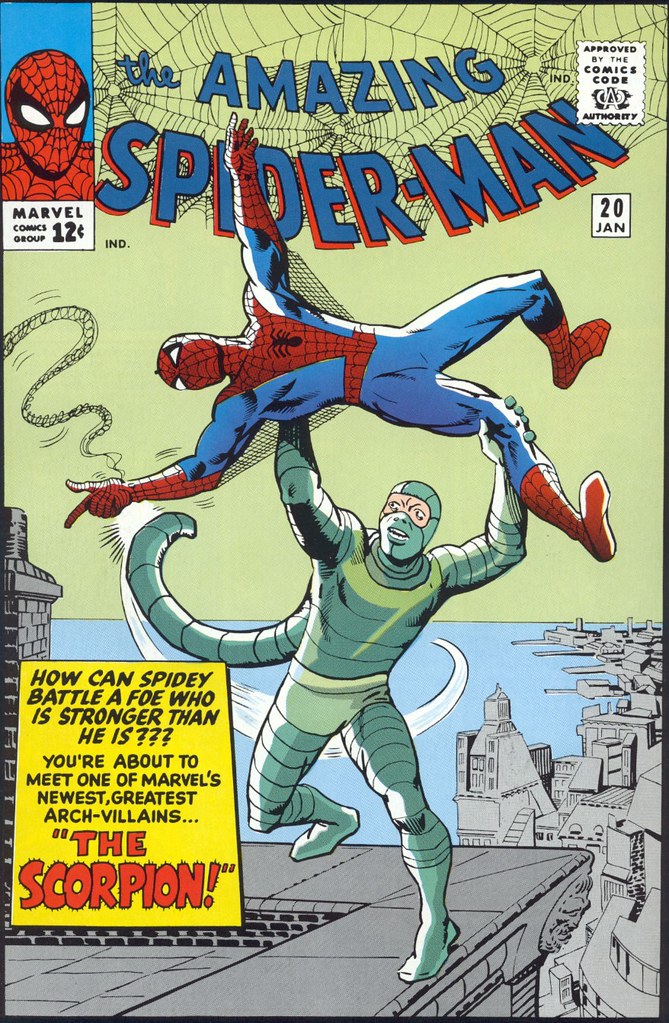
The Coming Of The Scorpion!


Amazing Spider-Man #20, January 1965.
(By Lee, Ditko, and Sam Rosen)


Thanks to the wonders of Marvel Tales reprints, this was one of the earliest Spider-Man books that I read, back when I was a nipper. And what a book it is! This book represents Stan and Steve at the height of their combined power, and is as close to perfection as you'll read in a Marvel comic. But don't take my word for it. See for yourself.

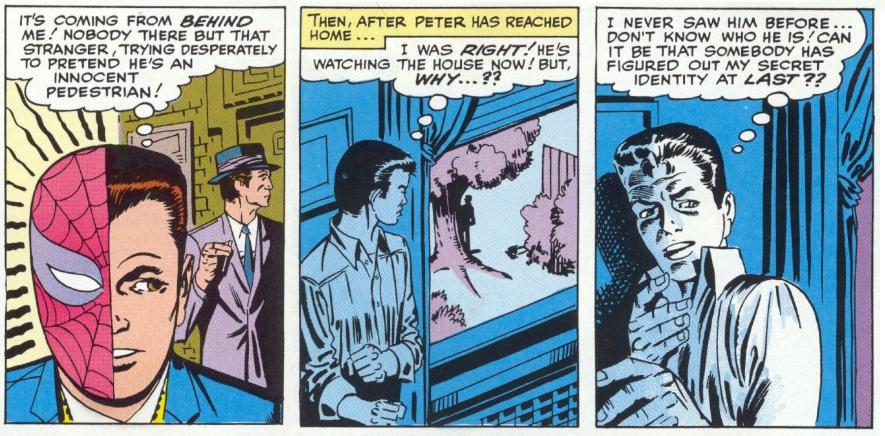
Our tale picks up with Peter Parker being stalked by a mysterious stranger, who hasn't reckoned on Pete's Spider-Sense...


I can't get enough of Kirby's "spooky" art. Look at those bags under Peter's eyes; too many late nights?

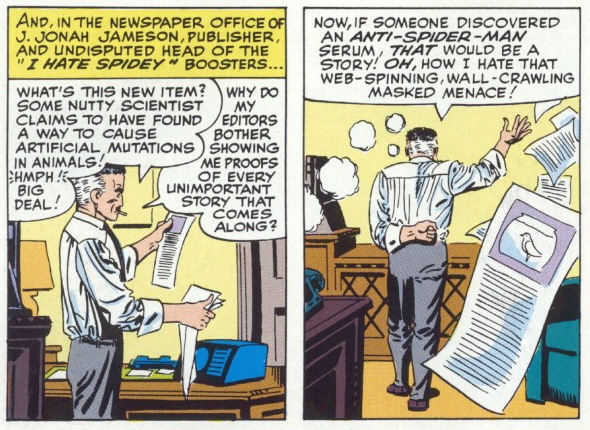
Meanwhile, whilst Peter Parker's being followed all over town, let's see what's happening at the Daily Bugle, shall we?


Say, that gives JJJ an idea, and before you can say "I have a bad feeling about this", he's got another wacky scheme to bring down Spider-Man.

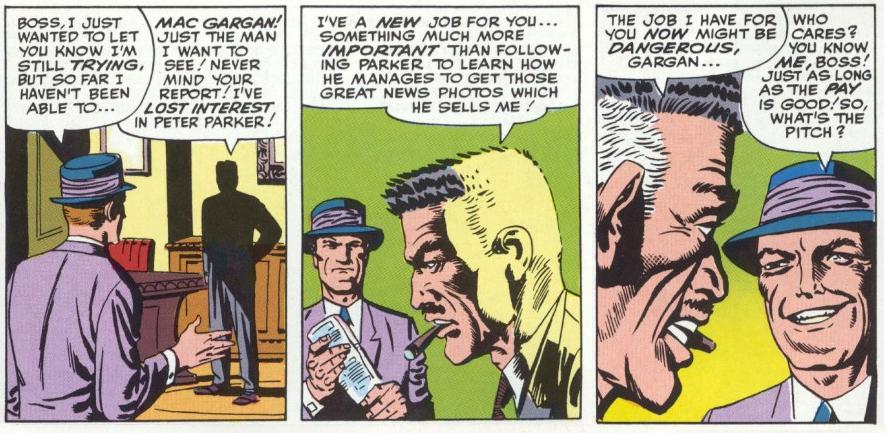
Our mystery man goes to see his equally mysterious employer, and, hey, whaddaya know?


Yeah, it's a bit of a con, but hey, as reasons for having Peter Parker go, at least it makes sense, reminds us that JJ is a piece of work, and shows us that Mac Gargan is a man who doesn't ask questions. Or an idiot. Possibly both.


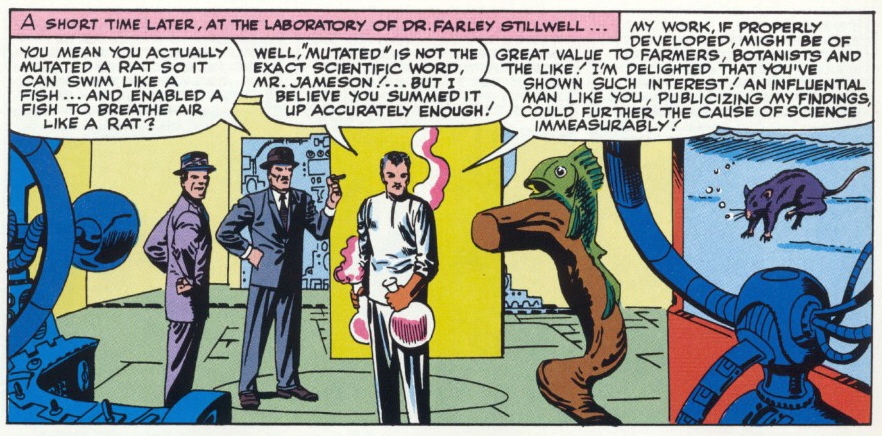
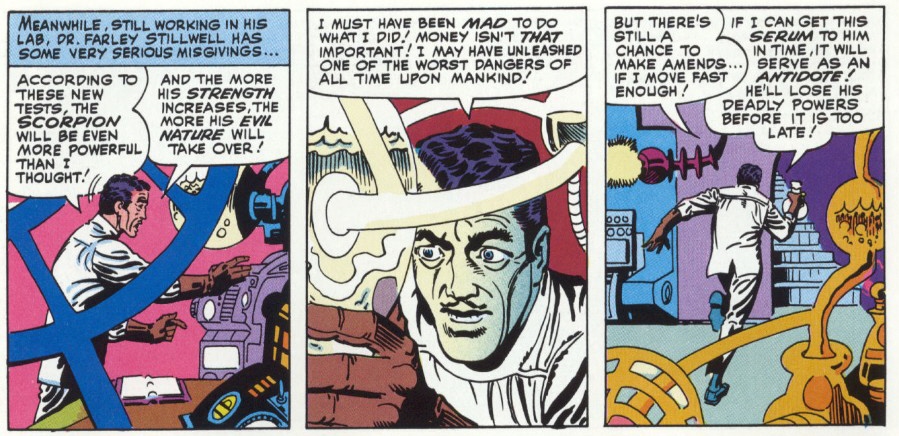
Doc Stillwell has some interesting ideas about scientific progress. I'm sure what farmers and botanists are crying out for is fish that can climb trees. Fortunately for Stillwell's bank balance, Jameson has money to burn, and a burning urge to create animal-themed super-powered vigilantes.


I'm not sure what's more odd, that the test subject has to have his head shaved before he can get super-powers, or that neither he nor the mad doctor give any thought at all to the "powers affecting your brain" thing. Actually, the thought that I'm not sure what's more odd, is itself more odd than either of these two things.


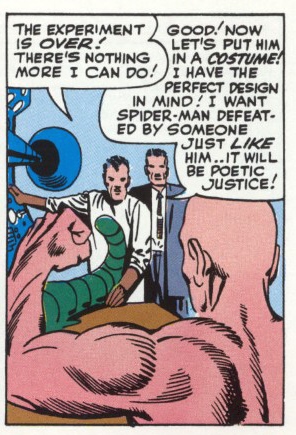
Yes, folks, you read that correctly. J. Jonah Jameson, the man who thinks that a brillo-pad haircut and the Hitler moustache is a sensible look, is going into costume design. Stand by...


Well, let's face it, we've seen worse. Although since JJJ intends the Scorpion to be a hero, it's a bit worrying that he's chosen to use a secondary, rather than a primary, colour.

Meantime, what's our hero up to?


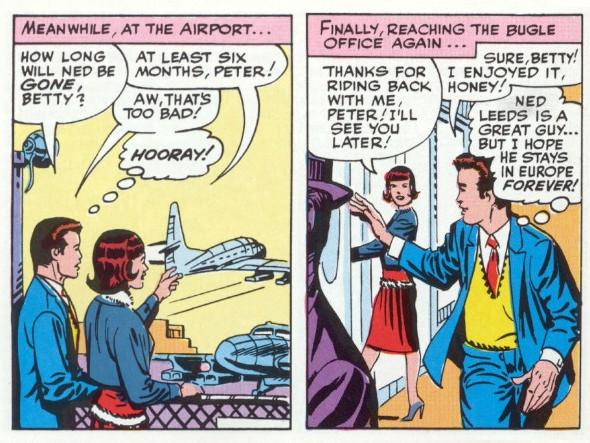
He's busy bird-dogging a potential rival for Betty Brant's affections. Ned Leeds, eh? Something tells me we'll be hearing more about that young man later.

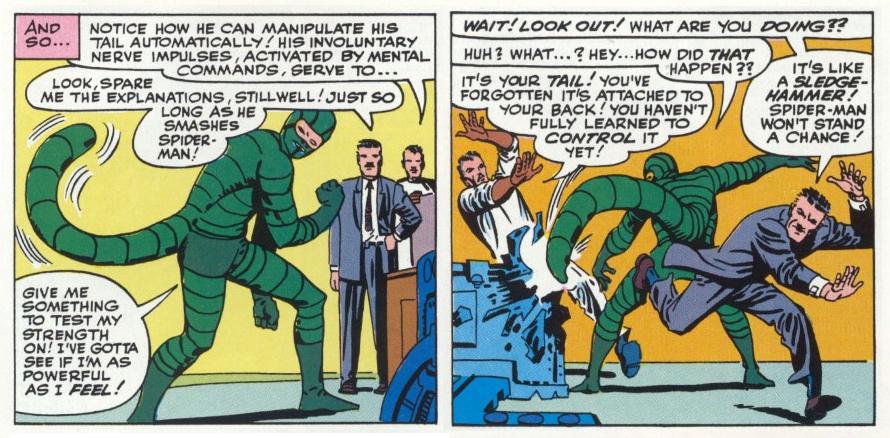
Anyway, finally getting into his Spider-suit, our hero goes to confront Jameson, and the Scorpion takes his chance. Soon, our protagonists are beating seven bells out of each other, whilst JJJ watches and gloats.


Meanwhile, in the land of mad science...


I'm oddly reminded of an episode of The simpsons where Dr Hibbert makes reference to being able to detect an "evil gene". Presumably, Dr Stillwell has access to the same evil detection device? Or all scorpions are evil? Or Stillwell's lost the plot? Or all of the above?

Anyway, while Stillwell sets off to undo his mad plan, the Scorpion has made short work of our hero. Time for the old evil gene to kick in.


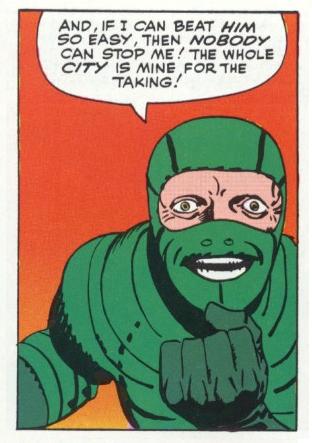
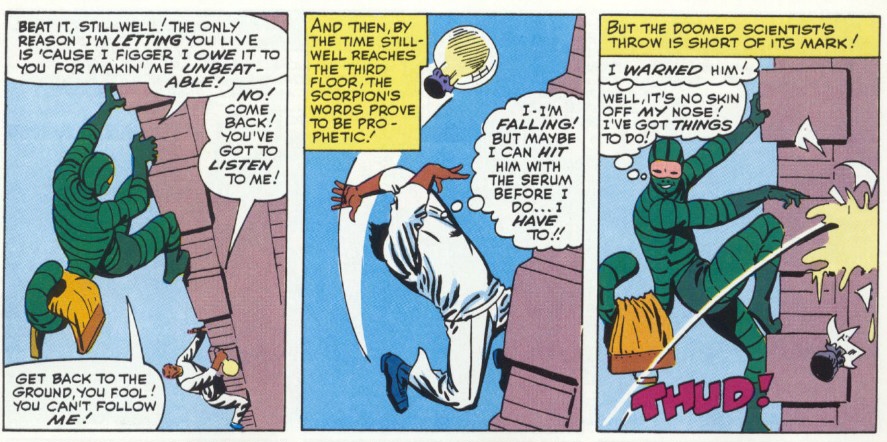
The Scorpion sets off on a one-man crime spree, whilst Jameson gnashes his teeth in impotent fury. But wait, here comes Doc Stillwell, to save the day.


RIP Dr Farley Stillwell: a surprisingly good climber, but a disappointingly bad aim.

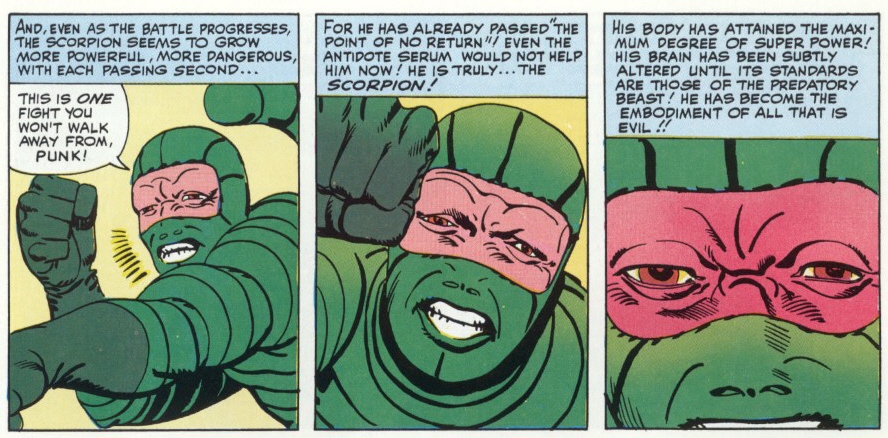
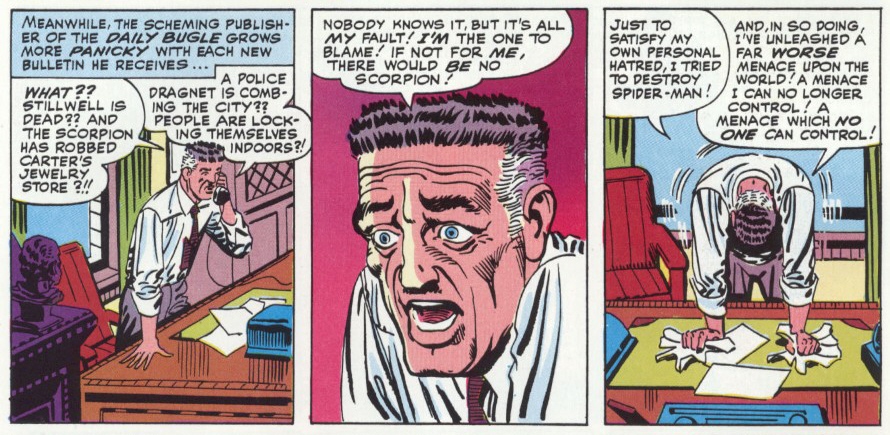
Meantime, Spidey has picked himself up off the floor, and is back for a second go at getting himself killed by the newest supervillain in town. And speaking of the Scorpion, Lee and Ditko give us a neat insight into his mind.


As if these three panels weren't enough to make this the best comic we've looked at so far, we follow up with the very next three panels, which take us into the mind of J. Jonah Jameson.


I mean, this isn't like 90% of the comics of the time. Lee and Ditko aren't just going through the motions here, they are really going for it. Comic creators of today should be made to study this issue, and at least some of them should be beaten to death with a rolled-up copy of it.

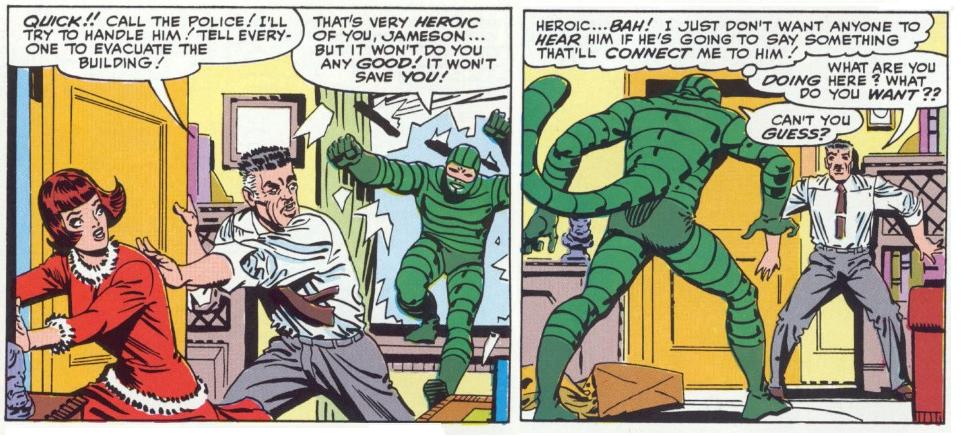
Enough of my gushing. After taking another beating from the Scorpion, Spider-Man is pretty much down and out, but his attempt to get his breath back is interrupted, as the Scorpion, realising that JJJ can tell the cops his secret identity, decides to go confront his former sponsor.


That's a boy, Jonah, do the right thing for all the wrong reasons. So, things are looking bad for JJJ - until Spider-Man shows up to save the day.


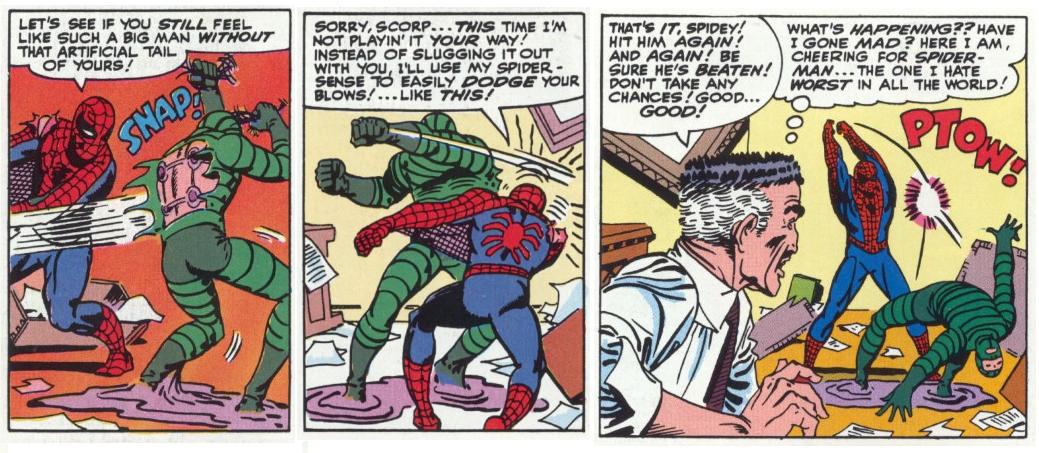
Spidey takes down the Scorpion, and leaves him for the cops, leaving Jameson to ponder on the irony of the situation. I bet JJ'll be changing his mind about Spider-Man from now on.


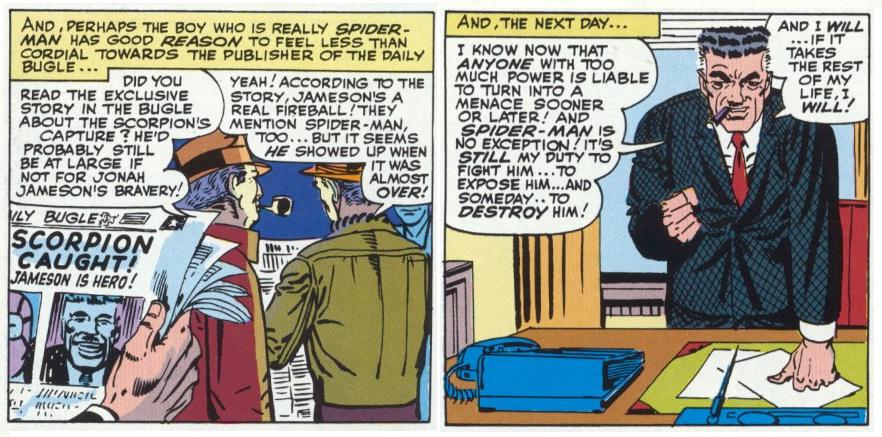
Oh well, maybe not. Anyway, the book ends, as all Spider-Man books should end, with our hero getting no credit for the situation, and his Aunt May fussing over his unexplained (to her anyway) bruising. Folks, if this isn't the perfect Spider-Man issue, then I'd like to know what is.

Wednesday, 26 November 2008

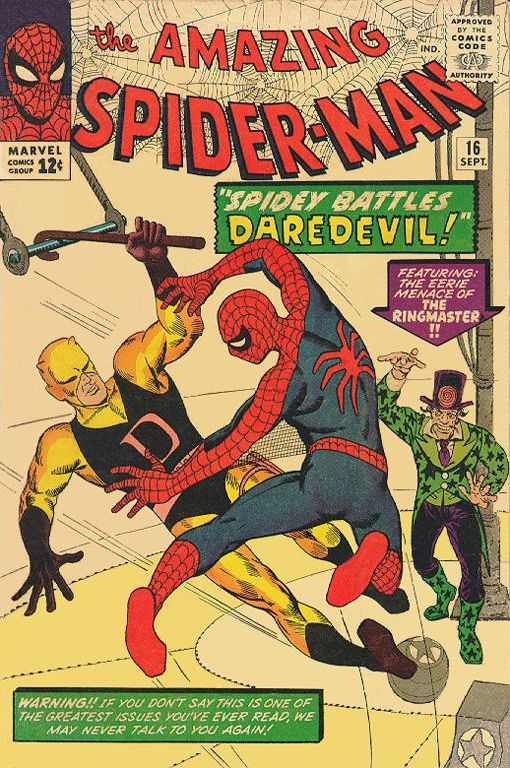
Special Cheap Reprint Edition: Spidey Battles Daredevil


Amazing Spider-Man #16, September 1964
(By Lee and Ditko)


Two years after their triumphant debut in the pages of Incredible Hulk #3, Stan Lee and Steve Ditko were scrabbling around for ideas for the next issue of Amazing Spider-Man. In the past three months, they'd brought us Mysterio! The Green Goblin! and Kraven the Goddam Hunter! How could they top that? How indeed...

Our tale begins with Peter Parker, the spectacular Spider-Man, rescuing a helpless blind man from a gang of robbers. This being the Marvel Universe, though, it's not just any blind man. Oh no.


With deductive skills like this, our blind man could work as some sort of stage mesmerist, amazing the crowds with his apparent clairvoyance. As you doubtless know, his interests lie elsewhere.


Yes, folks, it's Daredevil, in his crappy black and yellow outfit, the one which Demolition Man would one day adopt. Now, did you see there, how Stan The Man effortlessly tells his audience all they need to know about the guest star in just two panels? The art of introducing guest stars is a lost one, judging by current issues of many titles.

Anyway, at the office...


Nice of Foggy and Karen to invite him, but you have to wonder why they bothered. They have, I assume, noticed his blindness, which presumably reduces the effectiveness of visual-based entertainment.

Now, did someone say 'circus'..?


Well, lookee, lookee, that green coat looks mighty familiar...


Yep, it's him, Maynard himself, back out of the slammer and, in contravention of many parole requirements, reunited with his criminal cohorts. What's your nefarious scheme this time, Mayny?


Ah, there we go Pretend that Spider-Man's going to appear at your circus, attract a sell-out crowd, then fleece them. Ingenious! What can possibly go wrong?


Uh-oh...!

Now, then. Imagine you're the Ringmaster, you're halfway through your show, just ready to pull out the ol' hypno-hat and mesmerise your audience, when Spider-Man shows up. Do you (a) look on as Spider performs some neat acrobatic twists and turns, send in the clowns, do a few card tricks, and hot-foot it out of town, counting your lucky stars that he hasn't recognised you and hauled you back to jail, or (b) press on with your scheme anyway?

Go on, guess...


And with that, the Ringmaster does his thing, and the audience, Spidey included, are under his influence. Unbeknownst to the Ringmaster, however, one man in the audience is not under his spell. Yes, you've guessed it, Matt Murdock has changed his mind, and decided to play gooseberry on Foggy and Karen's date, and, being blind, the hypno-hat has no effect on him. Whatcha gonna do now, Maynard?


Now, this might, on the face of it, seem like a pretty good tactic on the Ringmaster's part. Hypnotise one foe into attacking the other, and escape in the confusion. However, I think the next three panels show quite eloquently why hypnotism is actually a bit shit.


When giving orders to your hypnotised slave, it's very important to consider your words carefully. The use of the phrase "Kill Daredevil!" might have been wiser than Maynard's choice of words.

From here on in, it's downhill for the Circus. Daredevil grabs the Ringmaster's hat, releases Spider-Man from his trance, and the two of them pummel the Circus into unconsciousness. In fact, such is the level to which the Circus is outmatched, that Daredevil abandons Spidey halfway through the fight, and goes back to join his friends. It was perhaps at this point that the reader should realise that the Circus may never make it into the big supervillain team league...

This, inventory post, originally presented in my other blog, back in 2005.

Friday, 14 November 2008

It's Not Only Marvel Who Can Do Cheap Reprints...

Before...


...and after...


Might want to reconsider that whole "no fatal errors" claim before you market that glider, Norman...

From Amazing Spider-Man #14, July 1964
(By Lee & Ditko)
And Amazing Spider-Man #122, July 1973
(By Gerry Conway, Gil Kane, John Romita & Tony Mortellaro)


This cheap gag originally presented in my other blog, February 2006.

Wednesday, 22 October 2008

Spider-Man: Before They Were Cliches!

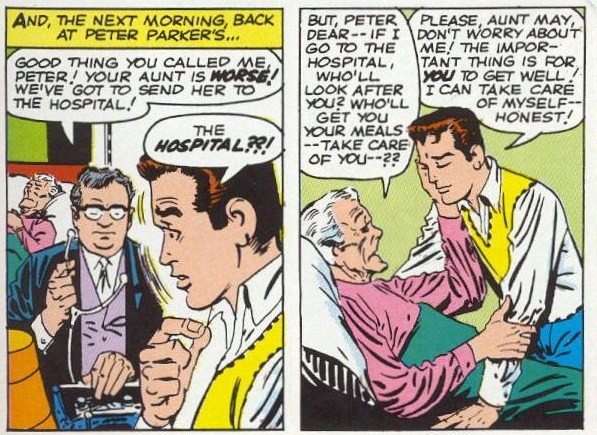
Peter Parker, welcome to the rest of your life...

From Amazing Spider-Man #9, February 1964.
(By Lee & Ditko)

Friday, 29 August 2008

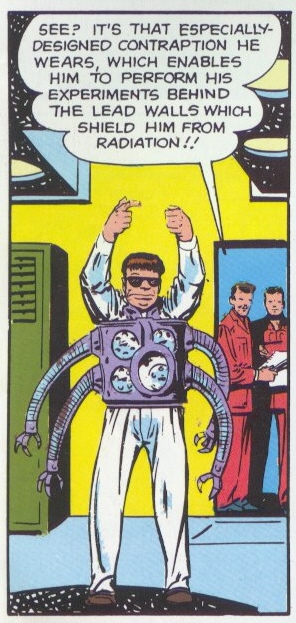
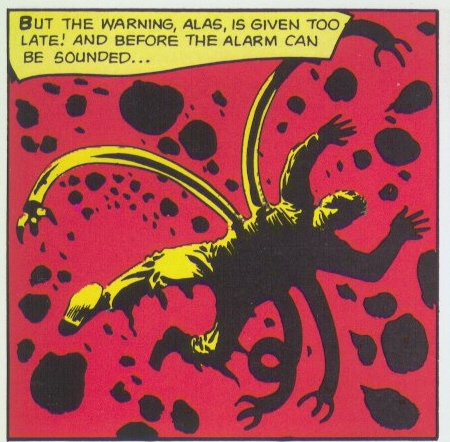
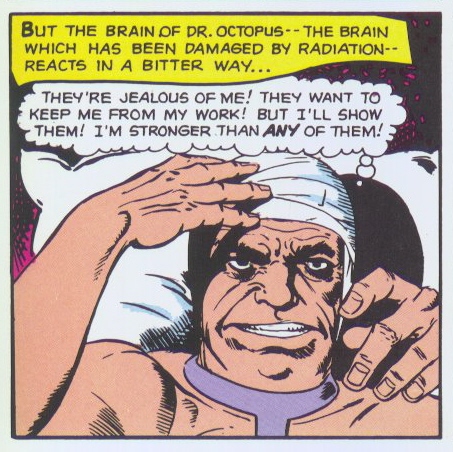
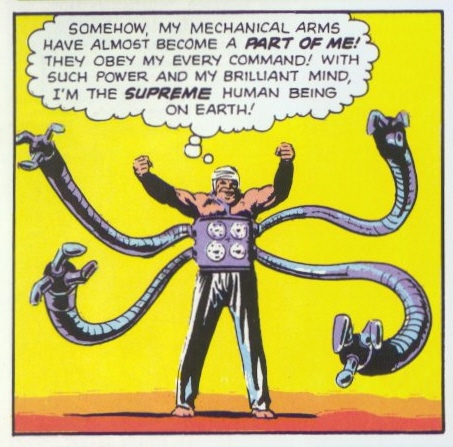
The Origin Of Doctor Octopus, In Six Panels


Amazing Spider-Man #3, July 1963
(by Lee and Ditko)


This can't end well...


Cue 40 years of getting beaten on by Spider-Man...