Showing posts with label Thing. Show all posts

Thursday, 22 October 2009

"Expect The Unexpected!"


So, as we've previously seen, 1986 saw the introduction of Jim Shooter's New Universe line, which was, I think, the first attempt by any comics company to launch, from scratch, a whole new universe, with heroes and villains gaining their powers as a result of a mysterious "White Event". We'd later see this sort of thing, again from Jim Shooter at Valiant Comics, from the launch of Image Comics, and indeed from Marvel with the 2099 and Ultimate lines. But this was, in 1986, a relatively revolutionary idea.


One of the controversies of the New Universe was that, according to legend, Marvel wiped out a swathe of its existing titles to make way for the new books. In actual fact the only books which I can see as being canned in the months before the launch were Power Man And Iron Fist, a title which had (and I speak as a big fan of Iron Fist) seen better times; Star Wars, which had lasted several years after the release of Return of the Jedi; Doctor Who, something of a niche product (in those days); and The Thing, despatched, at least in part, so that Jim Shooter could bring Ben Grimm back into the Fantastic Four fold. Other than that, and a couple of mini-series finishing up, there wasn't much in the way of dead wood being cleared in the months up to the launch of the first New Universe books.


Famously, Shooter fell foul of Marvel's new managment team, and so his plan to hire top talent to launch his new line was thwarted: oddly, no-one who was anyone wanted to write or draw a brand new, untried-out book, especially as there was no money to pay anyone. What we ended up with was a host of books written by Marvel's editorial team, and drawn by those who really needed the work.


Star Brand
Shooter himself wrote, whilst John Romita Jr, one of the few willing volunteers for the project, drew this, a tale of an ordinary man who suddenly gains superpowers. One of the more criticized books, described as a wish fulfilment book for Shooter himself, Star Brand was nonetheless one of the more lasting concepts, being picked up in the Marvel Universe proper long after the New Universe was long gone.

Spitfire And The Troubleshooters
Gerry Conway and Herb Trimpe came up with this one, based around the adventures of a group of MIT students and their battle suit


D.P.7
Mark Gruenwald and Paul Ryan wrote the entire 32 issue run of this one, concerning a group of suddenly-superpowered folk who, rather than be cut up like lab rats, go on the run. If you're a fan of the X-Men and The Fugitive, this might be your kind of thing.

Justice
Brought to us by Archie Goodwin and Geoff Isherwood, Justice concerned the exploits of an alien who came to Earth to hunt down the evil. At least it did, until Peter David was hired to retcon Justice into a delusional government agent instead. Amazingly, this book lasted 32 issues.


Kickers, Inc.
At the same time that Tom DeFalco and Ron Frenz were building a rep for themselves as the creative team on Amazing Spider-Man, they were also working together on this book, about a team good samaritans, led by a superstrong ex-footballer. As good as it sounds, this book managed 12 issues, before being put to death, by which time DeFalco and Frenz had left the book to take on the adventures of a golden-haired Asgardian.

Mark Hazzard: Merc
Written, at first, by Peter David, and drawn, at first, by Gray Morrow, this dealt with, as you may guess, the adventures of an appropriately named mercenary. Certainly different to normal superhero fare, it was barely related to any of the other New Universe books, which may explain why it lasted only the dozen issues.


Nightmask
Another book by Archie Goodwin, with a rotating cast of artists that included future workhorses, Ron Lim and Mark Bagley, among many others. Lasting just the twelve issues, this one began with Keith Remsen, comatose since an explosion, being awoken by the White Event, and gaining the power to enter people's dreams, like the Sandman, only wearing a domino mask, for some reason.

Psi-Force
A group of telepaths on the run from American and Russian secret service agents, Psi Force was the creation of Archie Goodwin (again) and Walt Simonson, though neither of them showed up to produce an issue. Notably, this did see some very early comics work from top 90s talent, Fabien Nicieza, who wrote half of its 32 issues.


After various attempts at tinkering, including the departure of Jim Shooter, the slimming down of the books, and a couple of "event" books, the New Universe line was somewhat unceremoniously killed off in the summer of '89, its titles replaced with a swathe of new books: Quasar; a second volume of What If?; and new titles for She-Hulk, Nick Fury and Moon Knight. The age of experiment was over, and it was back to stripmining Marvel's history, for the next few years, at least.

Tuesday, 20 October 2009

"Slay Your Enemies, And All You Desire Shall Be Yours!"

As mentioned yesterday, in 1985 (and indeed 1984) comic fans were getting all excited over Secret Wars. It was, while by no means the first mini-series published by Marvel, certainly the first one to have line-wide consequences. These days Marvel would call it an "event", publish a line of related titles, and you'd be sick of the thing before it was halfway finished. In the mid-80s though, Marvel just had many of their top heroes whisked away via a mysterious portal to another world, where they were forced to battle villains, with the promise of the ultimate prize for the winners. Jim Shooter took a year to tell the story of what had happened, but whilst these days, we'd face 12 months of comics featuring stand-in heroes in the missing characters' books, in those days, they simply showed the heroes returning the next month, and the radical changes which the as yet untold Secret Wars had wrought.

Spider-Man appeared with a new, black and white costume, which changed between civilian and super-duds depending on what was needed, and which never ran out of webbing. Later he'd discover that the costume was actually an alien symbiote, trying to take him over. Later still, the symbiote would be reborn as the villainous Venom, and later still, we'd all be sick of the sight of the black costume. But at the time, for all that it was just a change of look, we were quite excited by it.


The Incredible Hulk came back from Battleworld with a broken leg and a bad attitude. The broken leg was courtesy of a fight against Ultron, whilst the bad attitude came, at least in part, from the manipulations of old Dr Strange foe, Nightmare, out to get at the Sorcerer Supreme via one of his fellow former Defenders. Of course, a week of fighting the Absorbing Man and having mountains dropped on him probably didn't help the Hulk's disposition either.


The Vision, newly recovered from a near-death experience, took advantage of the disappearance of most of the Avengers to launch a bloodless coup. Naming himself chairman, he cosied up to the government and got them to approve setting up a new West Coast branch of the team. Had anyone realised that he was suffering from the android equivalent of brain damage after his time spent in a coma, he'd probably have encountered slightly more resistance.


Ben Grimm, in contrast to most of the heroes, quite enjoyed his time away from Earth. He discovered that he was able to turn back into his human form at will, and decided that, on the whole, he'd sooner spend his future riding around on pteradons than go home and be a monster again. So he chose to stay on Battleworld, leaving the Fantastic Four a man short.


The FF didn't waste time replacing the Thing, offering his place in the team to the first superstrong person they saw. In this case, the She-Hulk, who, although a member of the Avengers, was happy to cross the street to the Baxter Building. Later, the Human Torch would take advantage of the Thing's absence to shag his girlfriend. Classy. Secret Wars would also tease the readers of the FF with the mystery of how Doctor Doom, killed the previous year, could be alive on Battleworld. A somewhat convoluted explanation would eventually be given, accompanied by a somewhat gratuitous appearance by the Beyonder.


And the X-Men? Well, they stood around a hill in Japan talking a lot. Well, it was the 80s, and it was Chris Claremont, so perhaps we shouldn't have expected anything too revolutionary. In Claremont's defence, he did use Secret Wars to promote his agenda of Magneto as an extreme activist, rather than as an out-and-out supervillain, to break up Kitty Pryde and Colossus as a couple, and to justify Professor X deciding to take a more active role in leading the X-Men, but what we really remember is the constant talking...

Saturday, 17 October 2009

My First Comics

I may never know which Borders comics fan's mum decided to turf out his November and December-dated Marvel comics, but it was my good fortune that, rather than binning them, she instead donated them to one of the stalls at the Liberal Party's pre-Christmas Bazaar. At the event, where I was dragged by my mum and dad, not only did I get to meet the impressively-statured Cyril Smith, I was confronted with a selection of comics of which, until then, I was sadly unaware.


Alpha Flight #4 & #5 (both by John Byrne)
Alpha Flight #4 featured the tail end of a multi-parter in which the so-called Master of the World attempted to conquer the world, using Marrina the Fish-Girl. It also featured the Invisible Girl and Sub-Mariner, and introduced the idea of Aurora's multiple personality disorder. Issue #5 featured the dwarf, Puck, investigating a drug-smuggling ring based out of a hospital. For a comic featuring only one character I'd even heard of, Alpha Flight had me hooked from the start.


Fantastic Four #260 & #261 (both also by John Byrne)
FF #260 introduced me to the FF's nemesis, Doctor Doom (I may have been aware of him from things like the Spider-Man cartoons, but it would be a very vague awareness), and, before the end of the issue, had killed him off, in a battle between the Silver Surfer and Tyros. This was also the end of a multi-parter, but was also reasonably straightforward to fathom. Alpha Flight #4 was set immediately between #260 and #261, introducing me to the idea of crossovers between titles. #261 had the FF off in space, bumping into the Watcher, and had the team trying to justify not having let Galactus die in an earlier issue. This was a bit of a mystery, but by the end of the book, I pretty much understood what it was all about. The issue also featured a recap of the FF's origin, which was handy for newbies like me.


Amazing Spider-Man #246 & #247 (by Roger Stern and John Romita Jr)
ASM #246 was, essentially, an imaginary story, in which J. Jonah Jameson, Mary Jane Watson, the Black Cat, and Spidey himself daydreamed about their perfect day. Oddly, whilst Jameson and the Cat's dreams ended well, neither Mary Jane or Peter Parker were able to sustain their delusion, suggesting that both have some psychological issues to deal with. #247 featured Spidey teaming up with the fabulous Frog Man, a hunt for the Hobgoblin, and a mystery villain, Thunderball (of the Wrecking Crew). It would be years before I would find out who Thunderball is, and I have no idea to this day about Frog Man. The Hobgoblin was another story, of course.


Spectacular Spider-Man #84 (by Bill Manto and Dave Simons) and #85 (by Mantlo and Al Milgrom)
PPTSSM #84 featured Spidey hunting down a gang of child abductors, and was a purely self-contained story. #85, on the other hand, had the Hobgoblin show up to take on Spidey and the Black Cat. It also, handily, showed the story so far of the Hobgoblin, and featured Peter Parker having a get together with his old college friends, including Harry Osborn, which in turn introduced me to the history of the Green Goblin, which made Spider-Man's obsession with the Hobgoblin a lot more explicable.


Avengers #237 & #238 (both by Roger Stern and Al Milgrom)
Avengers #237 featured Spider-Man trying out for the team, an event alluded to in Spidey's own book, and had the Avengers fighting a whole load of supervillains in Project Pegasus. Looking back, I'm not sure why I accepted supervillains being imprisoned with their costumes on, but it's not something that gave me cause for concern at the time. Issue #238 had the Vision, in a coma due to an earlier battle, recover unexpectedly, showed the She-Hulk househunting, and featured a last-page appearance by Tigra and the ghost of Spider-Woman, the last of which confused the heck out of me.


Captain America #288 (by JM DeMatteis and Mike Zeck)
Set in the future world of 1993, this featured Cap teaming up with the cyborg, Deathlok, to take on the ruler of a destroyed New York. This was pretty much double-dutch to me at the time, and since I didn't have the next issue, it would be a long time before I'd find out how Cap stopped the imminent destruction of the world.

Daredevil #202 (by Dennis O'Neil and William Johnson)
This book had Matt Murdock's firm hired by an African tribe do do PR for their boss, Micah Synn. Micah turns out to be a nutjob, prone to dangling policemen out of windows. As a one-shot, it does a fine job of introducing DD and his significant others, and as an introduction to Micah Synn, it made me want to read more about him, which handily was what Denny O'Neil intended.


Defenders #125 (by JM DeMatteis and Don Perlin)
My first issue of Defenders featured the departure of the original team, the wedding of Patsy Walker and Daimon Hellstrom, and a new team being formed. it also featured an Elf. Much of this made little sense, but thankfully, there was a handy letters page which clarified some of what was going on.

The Thing #5 (by John Byrne and Ron Wilson)
This book had Ben Grimm getting beaten up, for no readily apparent reason, by Wonder Man, She-Hulk, and Spider-Man, before being possessed by his old foe, the Puppet Master. I didn't know at the time who the Puppet Master was, nor why he was out to get the Thing, so this was a less successful introduction to the book, but since the book was essentially an FF spin-off, it wasn't too much of a problem.


Incredible Hulk #289 (by Bill Mantlo and Sal Buscema)
The Hulk was intelligent at this point in his history, which seemed odd at the time, less so now. It had MODOK setting the Abomination to attack Bruce Banner, who was working for the government on gamma ray research - which with hindsight seems less logical than the Hulk's intelligence. Mostly the issue involved Hulk beating up the Abomination, which for a Hulk book is pretty much what you'd expect.

Marvel Team-Up #135 (by Bill Mantlo, again, and Ron Frenz)
This issue featured Kitty Pryde (note the lack of codename) rescuing some kidnapped children from the Morlock tunnels, with the help of Spider-Man. I didn't know who the Morlocks were at the time, and I'm not sure why they were kidnapping people, but it was a decent enough tale, at the time.


The Mighty Thor #337 (by Walt Simonson)
This was a flummoxer. Thor lost his powers, whilst an alien invader gets them. Nick Fury turns up, with little explanation of who he is and why he has a flying car and a helicarrier. And out in space, someone is forging something big. Now, having read the succeeding two years worth of issues, I know this is a classic, but at the time, it was not a good first issue. Not at all.

Uncanny X-Men #175 (by Chris Claremont, Paul Smith and John Romita Jr)
Speaking of confusing first issues, this issue features the wedding of Cyclops and Madelyne Pryor, the return of Dark Phoenix, and Mastermind looking for revenge against the team for what Phoenix had done to him. Confusing stuff, but with enough exposition (this was a Claremont book) to make it explicable.

So there you have it. My first 18 Marvel books. Some classics, and some, less than classic, but enough to get an 11 year-old me hooked on the things, if not for life, then at least for the forseeable future. To my bank manager's horror.

Thursday, 20 November 2008

"We Have To Fight - The X-Men!"


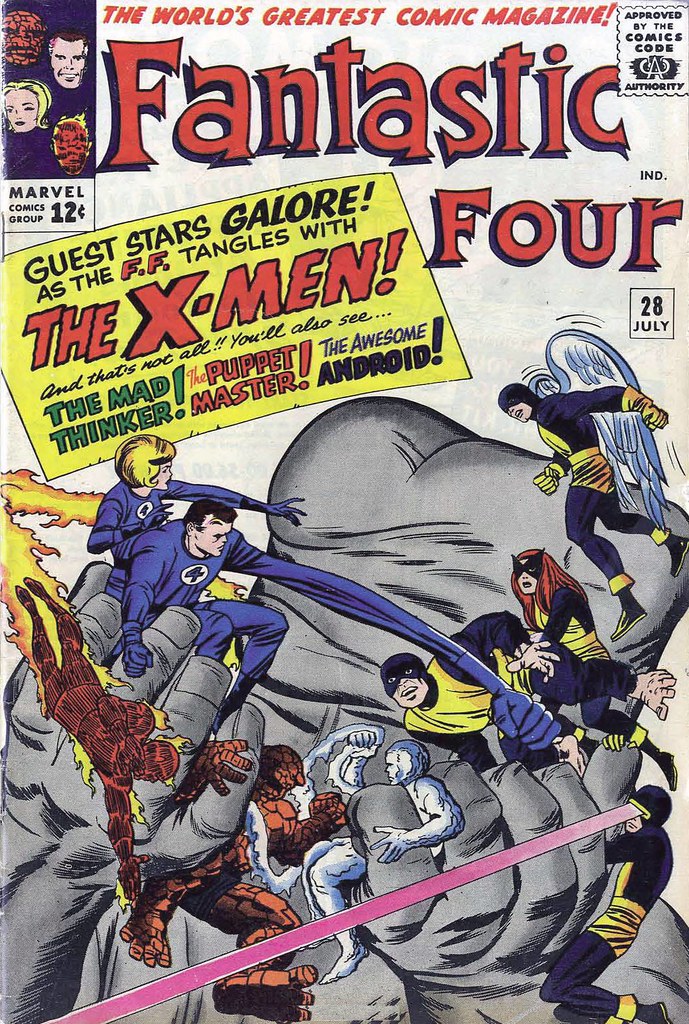
Fantastic Four #28, July 1964
(By Lee, Kirby, & Chic Stone)

Well, here we are. Stan has gotten the hang of the whole shared universe thing, and in the past three months, he's had:

The Hulk show up in the pages of Fantastic Four #25 & 26.

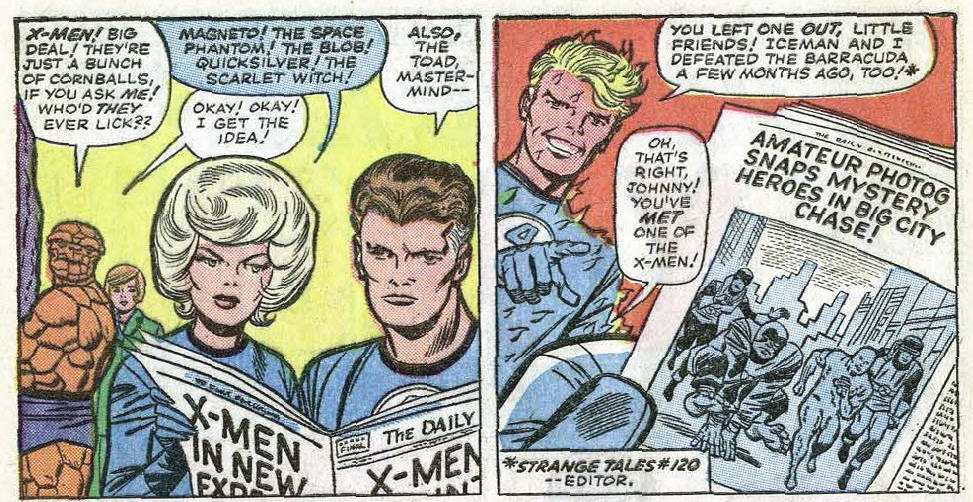
Iceman teaming up with the Human Torch in Strange Tales #120.

The FF try to hire the services of Nelson & Murdock in Daredevil #2.

Dr Strange help the FF take on the Sub-Mariner in FF#27.

Spider-Man and the Green Goblin running into the Hulk in Amazing Spider-Man #14.

Spider-Man and Giant-Man tricked into fighting each other, in Tales To Astonish #57.

Whilst I'm sure that these appearances weren't purely designed to flog more copies of the guest stars' own books, I have my doubts at times...


With the gratuitous plugs out of the way, we'd best track down the villains of the piece. Here they are, folks!


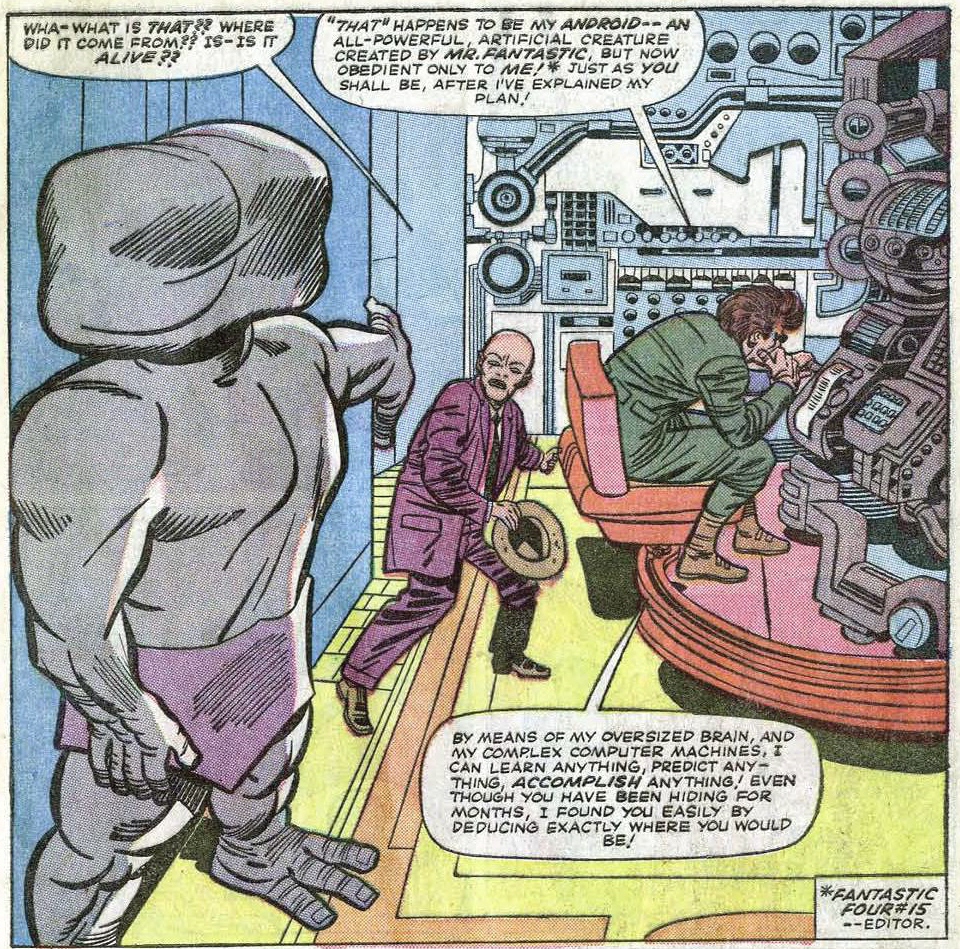
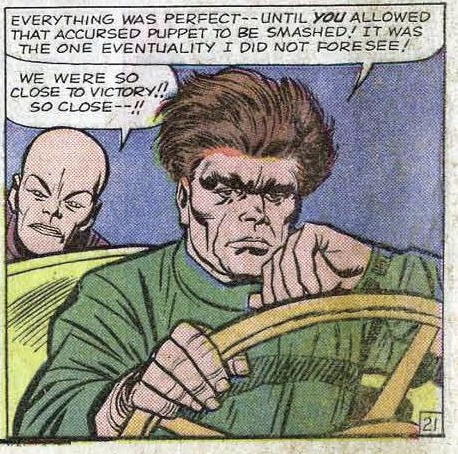
That there baldy fella is the Puppet Master. He can sculpt clay into little voodoo dolls. His daughter is also the Thing's girlfriend. The bloke with the big hair is the Mad Thinker. He's a genius, dontcha know?

Both the Thinker and the Puppet Master have had their heads handed to them by the FF in the past, and they want revenge. What's the plan? Glad you asked.


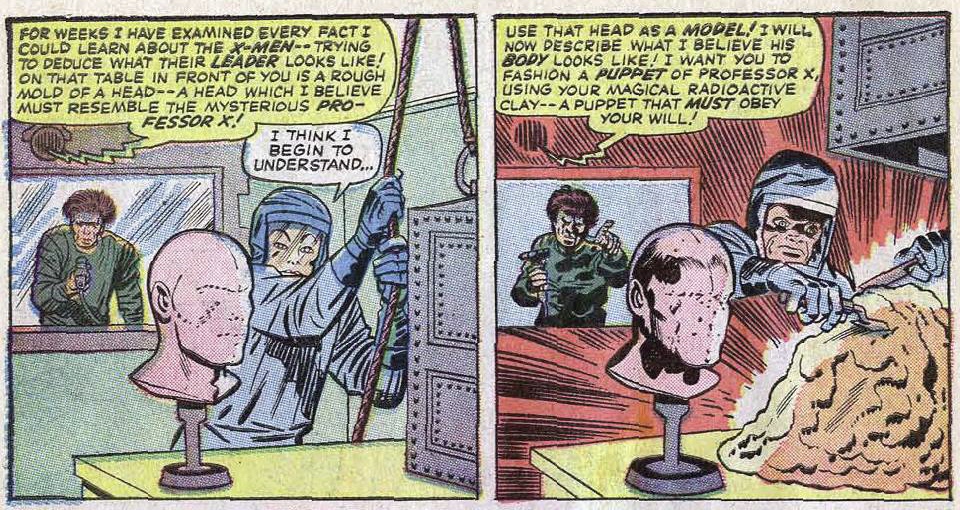
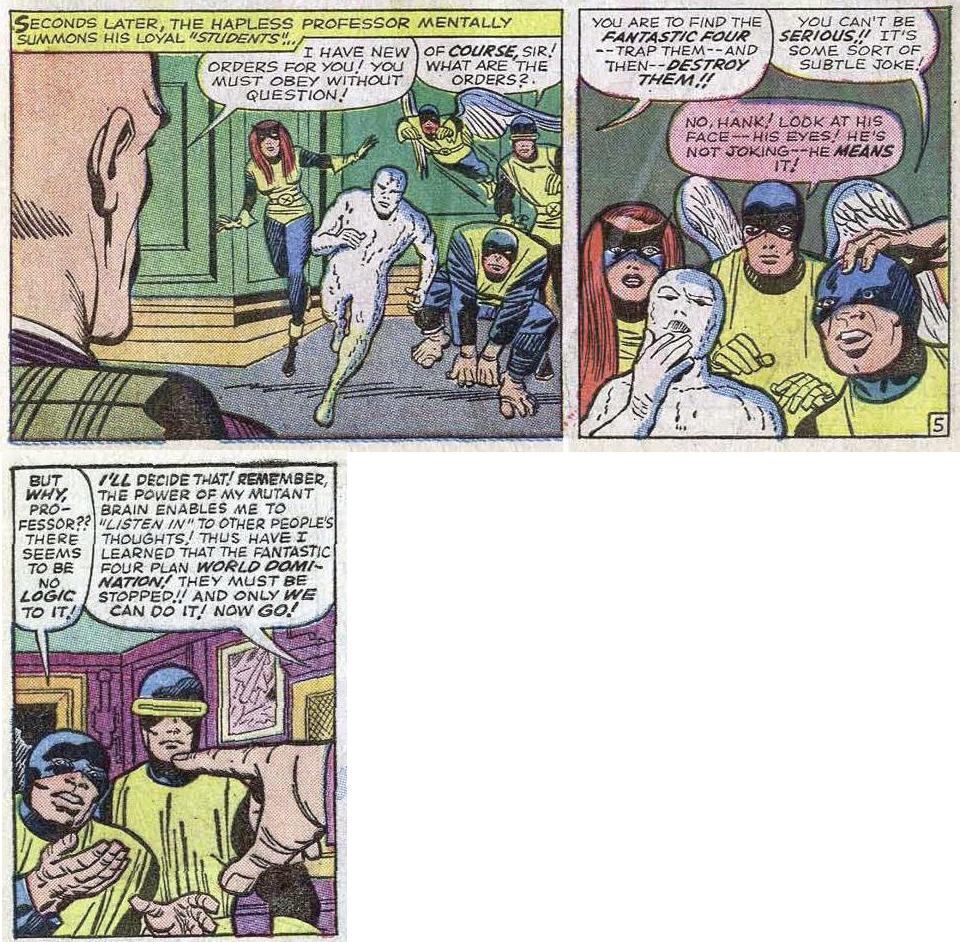
Either the Mad Thinker is incredibly smart, or Prof X needs to spend less time accompanying the team on missions. The Puppet Master does his thing, and before we know it, Professor X is under his mental thrall.


And here we see the benefits of Xavier's policy of training his students to obey orders without question: even when those orders are clearly bonkers, his students rush to obey them. The X-Men hop in their helicopter and head over to the Baxter Building, where they lure the FF out of the city, by dint of (that already clichéd strategem) kidnapping the Invisible Girl.

The FF are soon in hot pursuit, but the X-Men are waiting for them...


You tell 'er, Cyclops, you fascist drone.

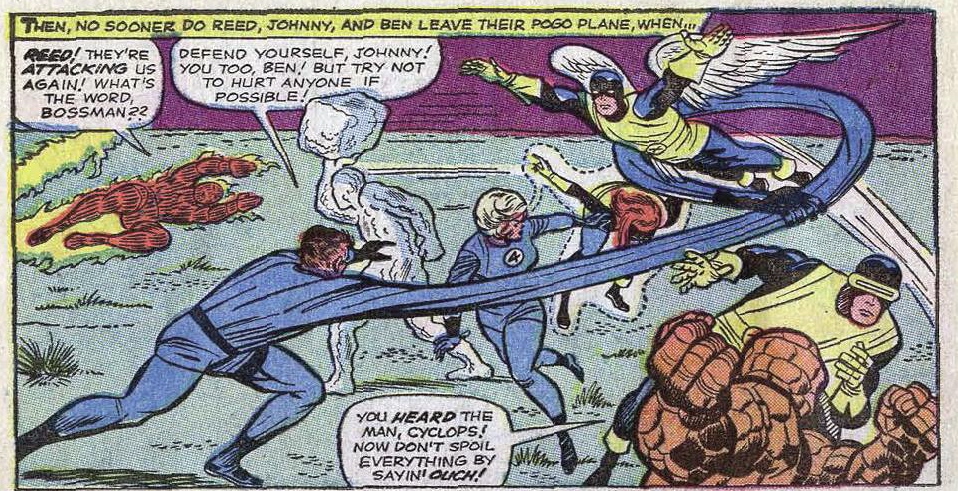
Anyway, Professor X's plan, it appears, is for the X-Men to beat up the Fantastic Four. Naturally, violence ensues.


Ok, so, Human Torch versus Iceman, fair enough, could be a long fight, but it makes sense, I guess. Personally, I'd get the Invisible Girl to catch Angel in a force-field, given how hopeless Reed is at achieving that goal. And, really, Cyclops versus the Thing? Poor Cyclops. I'm assuming Beast is off-camera reading a biology book or some such, rather than joining in the bruhaha?

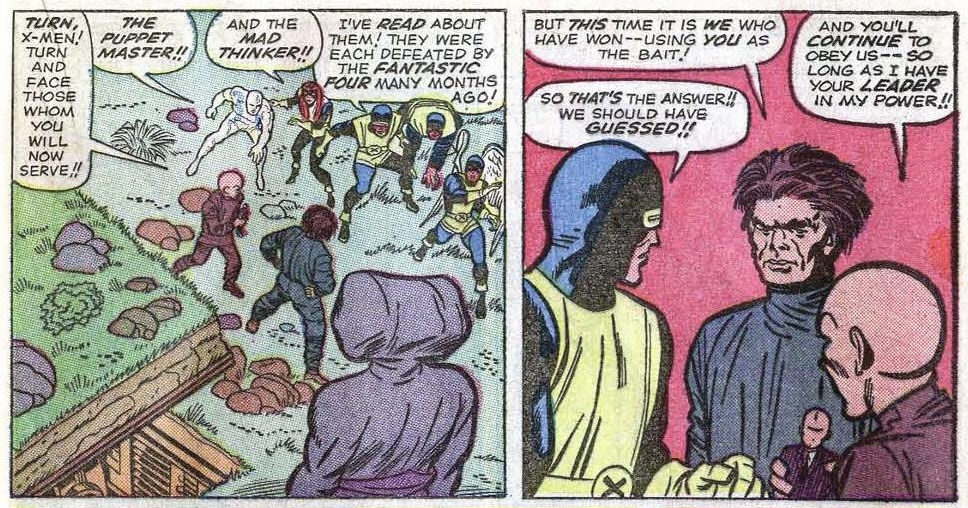
To liven up the battle, the Mad Thinker has set various booby-traps on the field of battle, which succcessfully capture the FF, who are too distracted by the fight to avoid said traps. Not a bad plan, as far as it goes, but naturally, the Thinker can't help but gloat.


Crivvens, what a scunner! Puppet Master orders the Professor to knock out his merry mob, but reckons without the super-brain of Hank McCoy, who can resist mental domination just be dint of being really smart. The Beast crushes the Prof X voodoo doll and rescues his team, whilst the FF free themselves, just in time for the big fight!


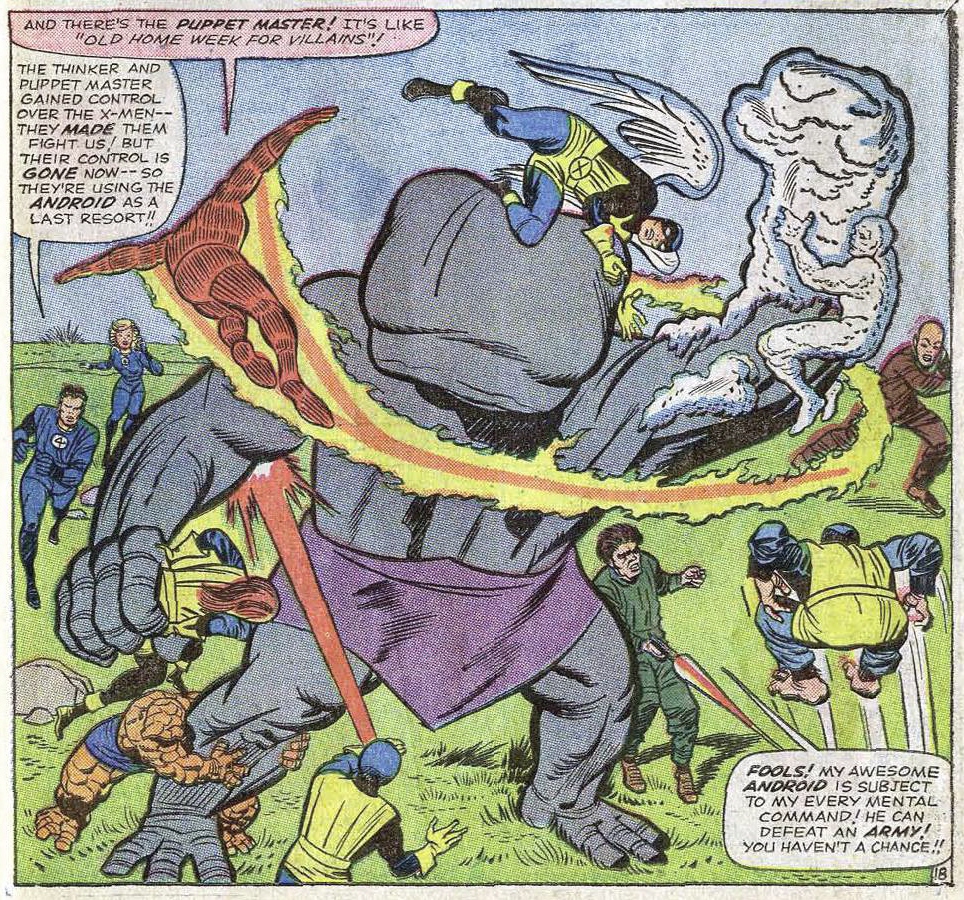
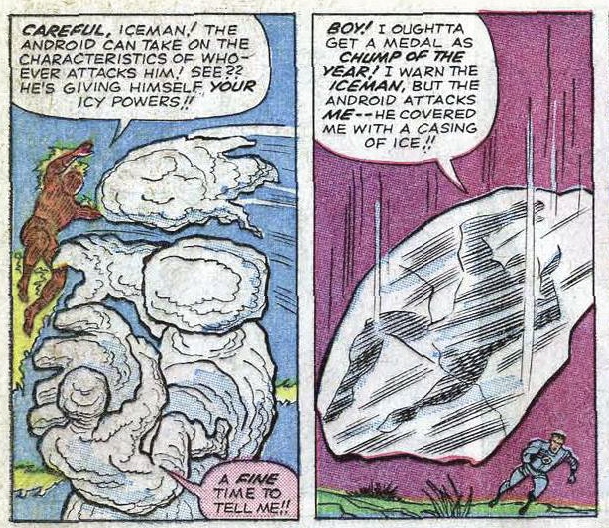
The Awesome Android, you may not know, can copy superpowers, which, when he's fighting nine superheroes, gives him a bit of room to get his groove on.


Unfortunately, no amount of superpowercopying mojo can overcome our heroes, particularly when Professor X gets in on the act.


And what of our villains? They're escaping in the Thinker's escape plane. Ready to work together again, boys?


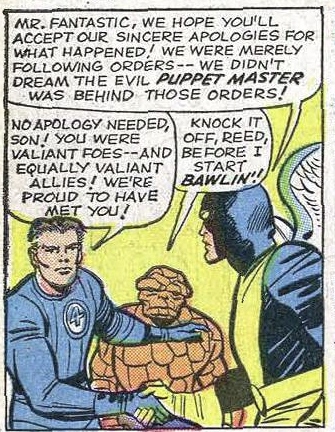
Hmm, guess not. Anyway, just time for some weasil words from Cyclops...


That's right, boys, kiss and make up, until your next fight...

Saturday, 13 September 2008

A Skrull Walks Among Us!


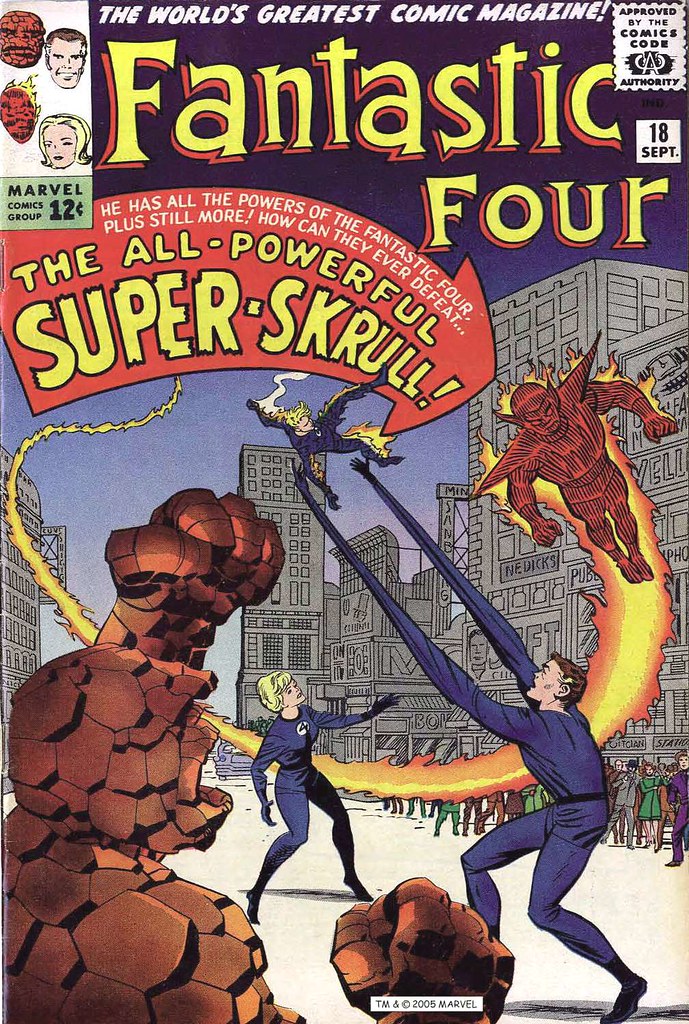
Fantastic Four #18, September 1963. Again.
(By Lee, Kirby, and Ayers)

As I may have mentioned in the past, I used to run a Marvel Superheroes RPG, back in the days when I still had the time, energy, and enthusiasm to try to run a decent game. In the course of the campaign, I learned many hard lessons about super-powered combat. So, with the aid of this issue of FF, let me bring you

Dr Sordid's 10 Tips For Truly Effective Super-Villains!

1. Good Planning Is Half The Battle.


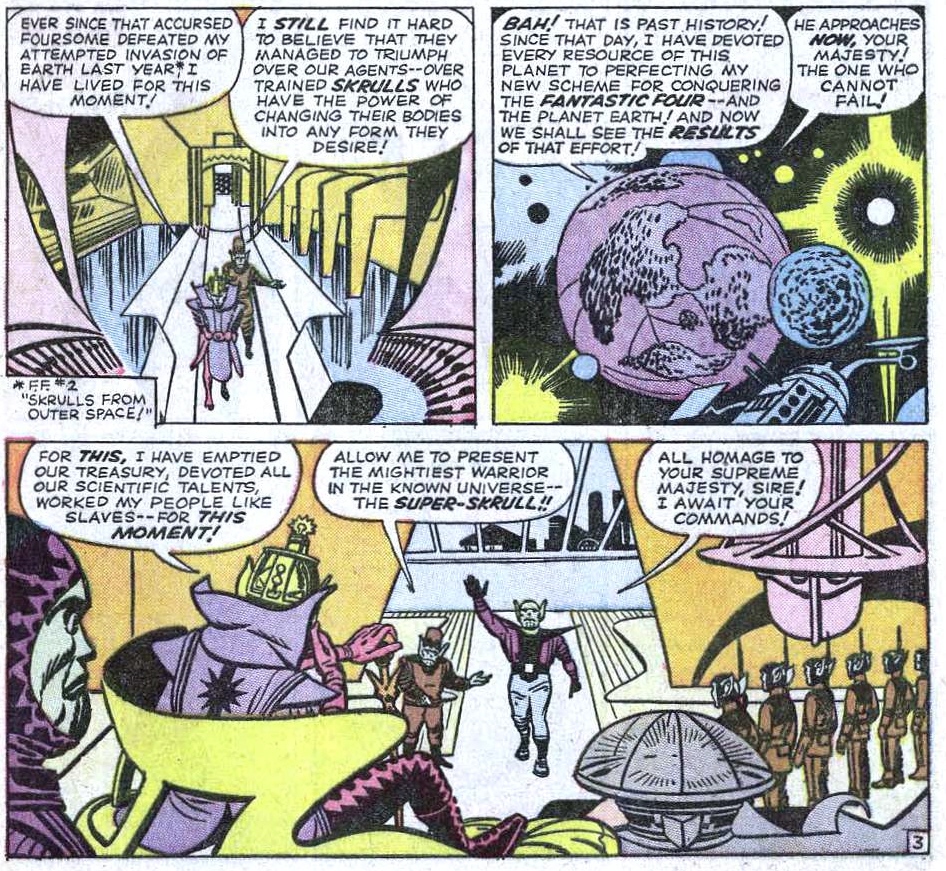
As the Emperor of the Skrulls demonstrates here, it's vitally important to put the appropriate time and money into developing your super-villain. That can make the difference between reducing your enemy's homeplanet to rubble, and being left with andromedan egg on your face.


2. Imitation Is The Sincerest Form Of Flattery.


Surprisingly few superheroes consider how to counter their own powers. Which is odd, when you consider just how often a superhero meets his evil twin, or has his powers stolen by a villainous scientist.


3. Always Go One Better, Just In Case.


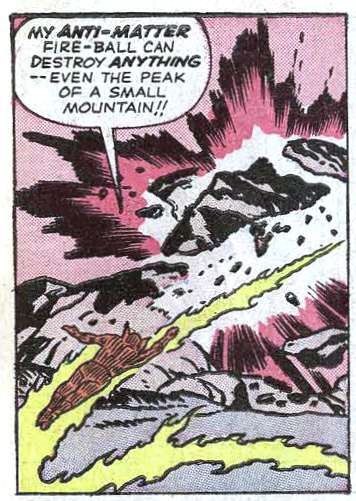
If you're going to make copying your enemies abilities your schtick, it's wise to make sure that the R&D department provide you with a bit of extra oomph, on the off chance that you encounter a hero who's smart enough to consider the previous point.

4. Put On A Good Show.


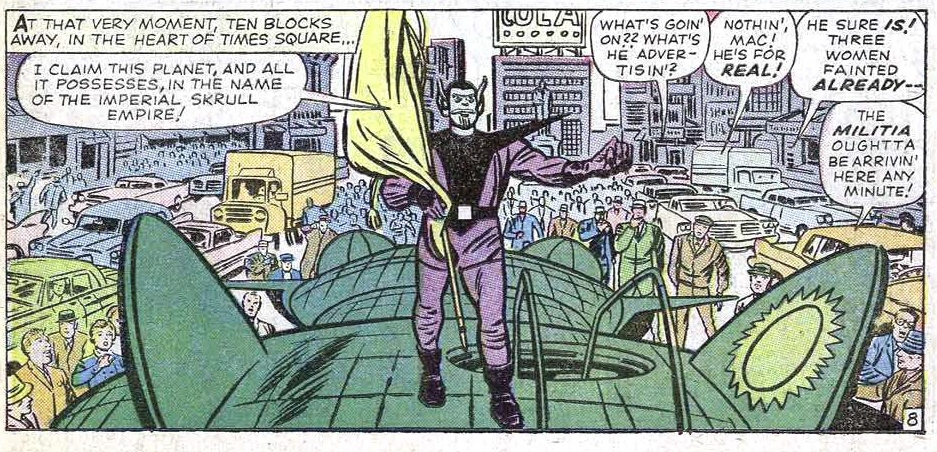
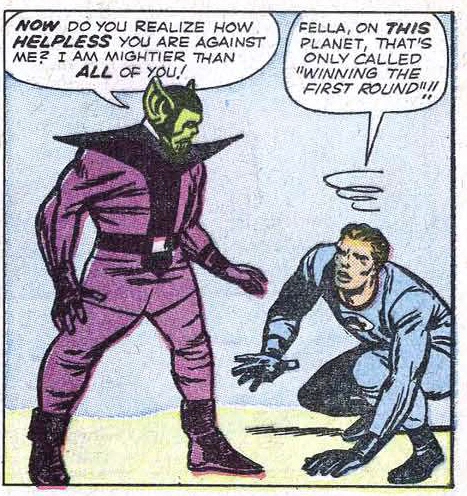
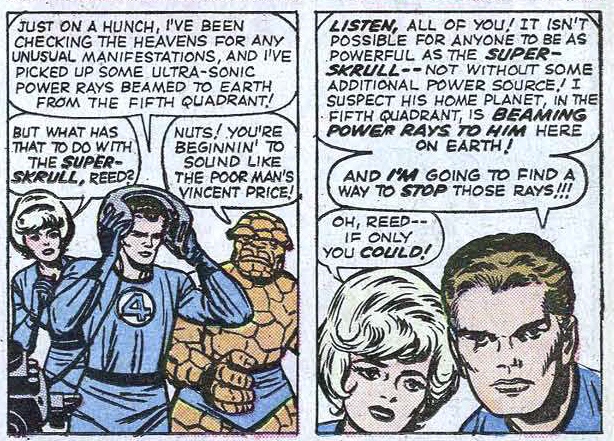
When presenting to a potentially hostile, audience, you can't go wrong with a good strong introduction. If enough people believe you're capable of single-handedly conquering New York, then their faith in the heroes who show up to take you on can be dented, which never harms your chances, when it comes to the inevitable fight sequence.


5. Don't Take Any Crap From Civilians.


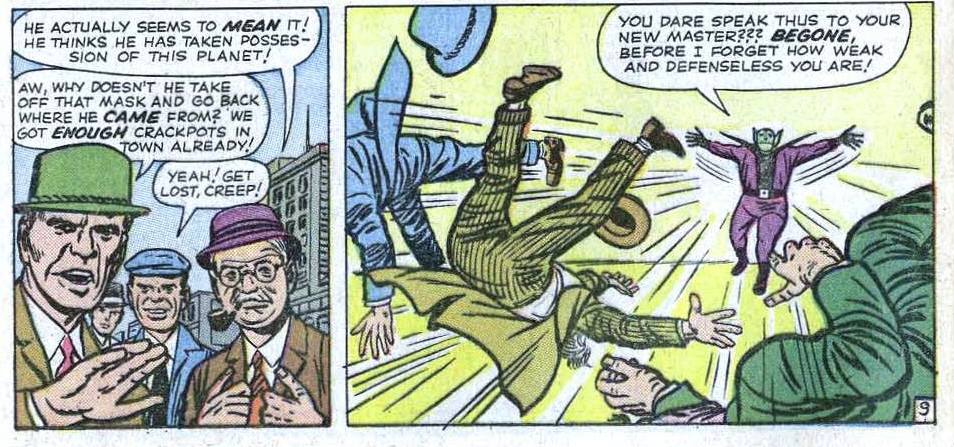
Residents of the Big Apple are notoriously reluctant to welcome visitations from alien invaders. It's best to beat the crap out of any pipe-smoking, fedora-wearing New Yorkers who give you any back-talk. (Oddly, a variation on this advise, replacing "alien invaders" with "tourists", appears in the most recent edition of the Rough Guide To New York. Who'da thought it?


6. Resist The Urge To Gloat.


Should your first encounter with the heroes go well, then it's best not to rub your opponent's nose in it. Heroes have an annoying tendency to bounce back, and you can bet anything you say now will come back to haunt you later. Remember: pride cometh before a fall, so a slight smile should be your only outward expression of satisfaction.


7. Goats Are Not Scary. Not Even A Little Bit.


This one should be self-explanatory, but just in case: before you invade an alien planet, check which animals are regarded as fearsome, and which are thought of as cute or ineffectual.


8. Never, Ever, Let Super-Smart Heroes Get Access To A Laboratory.


If you have a weakness which can be exploited, you can bet your bottom Altarian Dollar that the heroes will find it, if you give them an opportunity. So, either don't give them that opportunity, or better yet, don't have any such weakness in the first place.


9. If All Else Fails, Cheat!


If things are starting to not go your way, then it's time to pull something out of your back pocket. And, speaking from personal experience, let me tell you that hypnotism is a seriously underrated superpower! Why fight your foes, when you can mesmerise them into beating the crap out of each other instead?


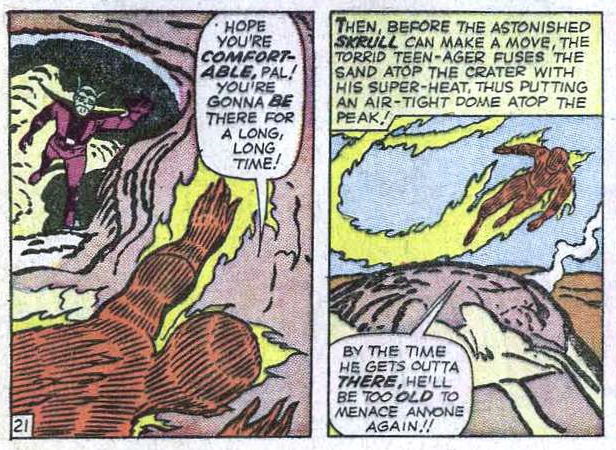
10. Always Have An Escape Plan.


If you've had your arse handed to you by the superheroes, then I recommend you have a means of avoiding being sealed up in a volcano for ever. A teleporter, perhaps, or a rescue ship from your home planet. If not, it may not be the end of the world, as the odds are you'll be back anyway before too long....